Pale Blue Dot: A Vision of the Human Future in Space by Carl Sagan
Carl Sagan's Pale Blue Dot transformed how I understand our species. We are not on Earth. We are in space. Earth is a projectile hurling through the void at 620 kilometers per second, and we are passengers who forgot we were traveling. This book returns that knowledge to you.
We Are Already in Space
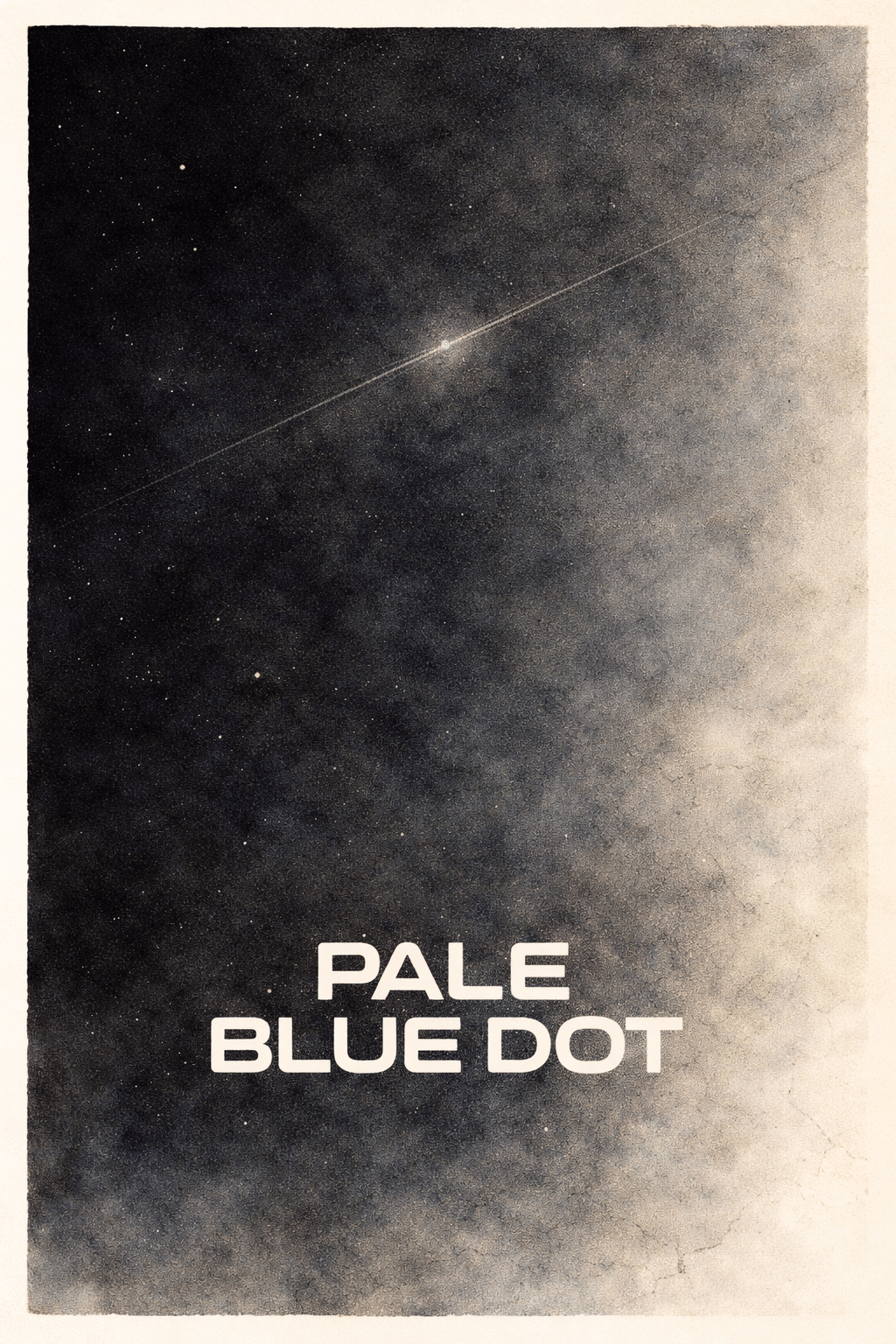
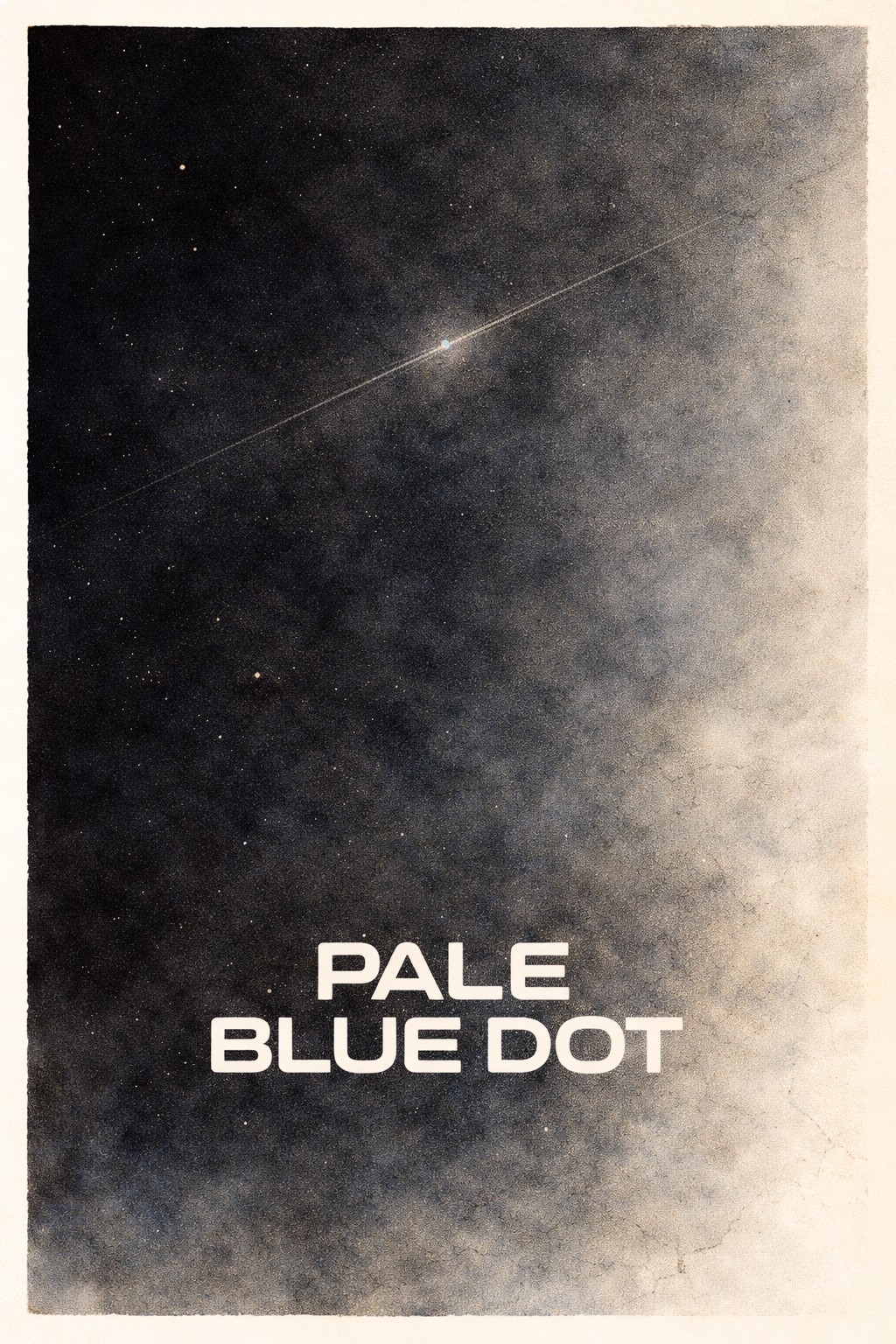
Late 1990s. University of Washington. I found this book in the campus bookstore and bought it because of the cover: a grainy photograph with an arrow pointing to what looked like a speck of dust suspended in a sunbeam. That speck was Earth, photographed by Voyager 1 from 3.7 billion miles away at Carl Sagan's request.
I read it in two sittings. When I finished, I sat there. The room had not changed. The coffee had gone cold. But the world looked different. Everything looked different.
Years later, I discovered the audiobook narrated by Sagan himself. His voice became my companion for long drives when I needed to remember what mattered. When the small dramas of human life threatened to consume my attention, I would listen to him describe our pale blue dot, and the noise would fade.
Here is what Sagan understood that most of us forget: we are not on Earth. We are in space. Right now. Earth is not a fixed platform from which we observe the cosmos. It is a projectile hurling through the void. We spin at 1,670 kilometers per hour at the equator. We orbit the sun at 107,000 kilometers per hour. Our sun drags us around the galaxy at 828,000 kilometers per hour. And our entire local group of galaxies moves toward something called the Great Attractor at 620 kilometers per second.
We live in space. We travel through space. We are of space. And we forgot.
This book returns that knowledge to you. (Buy on Amazon)
The Photograph That Changes Everything
The book opens with the famous image. Voyager 1, having completed its planetary mission, turned its camera back toward home from the edge of the solar system. What it captured became the most important photograph ever taken.
Earth appears as a fraction of a pixel. A mote of dust in a sunbeam.
From that vantage point, Sagan writes one of the most powerful passages in the English language. Every human who ever lived, lived there. Every king and peasant, every young couple in love, every mother and father, every inventor and destroyer, every teacher of morals, every corrupt politician, every saint, every sinner in the history of our species. All of it. On that tiny point of light.
I have pondered human intelligence and human being. On being, consciousness, and why we are so different from every other creature on this planet. It seems unnatural. We are alien to much of the natural world. Something happened to our species that we cannot explain. And now here we are, the only beings we know of who can look back at their origin point from 3.7 billion miles away and weep at the beauty and fragility of it.
The photograph does not diminish human achievement. It clarifies it. Our petty differences, our territorial disputes, our tribal conflicts. How absurd they appear when you realize we are all passengers on this tiny vessel together. The borders we fight over are invisible from space. The ideologies we kill for are unknown to the cosmos.
The Great Demotions
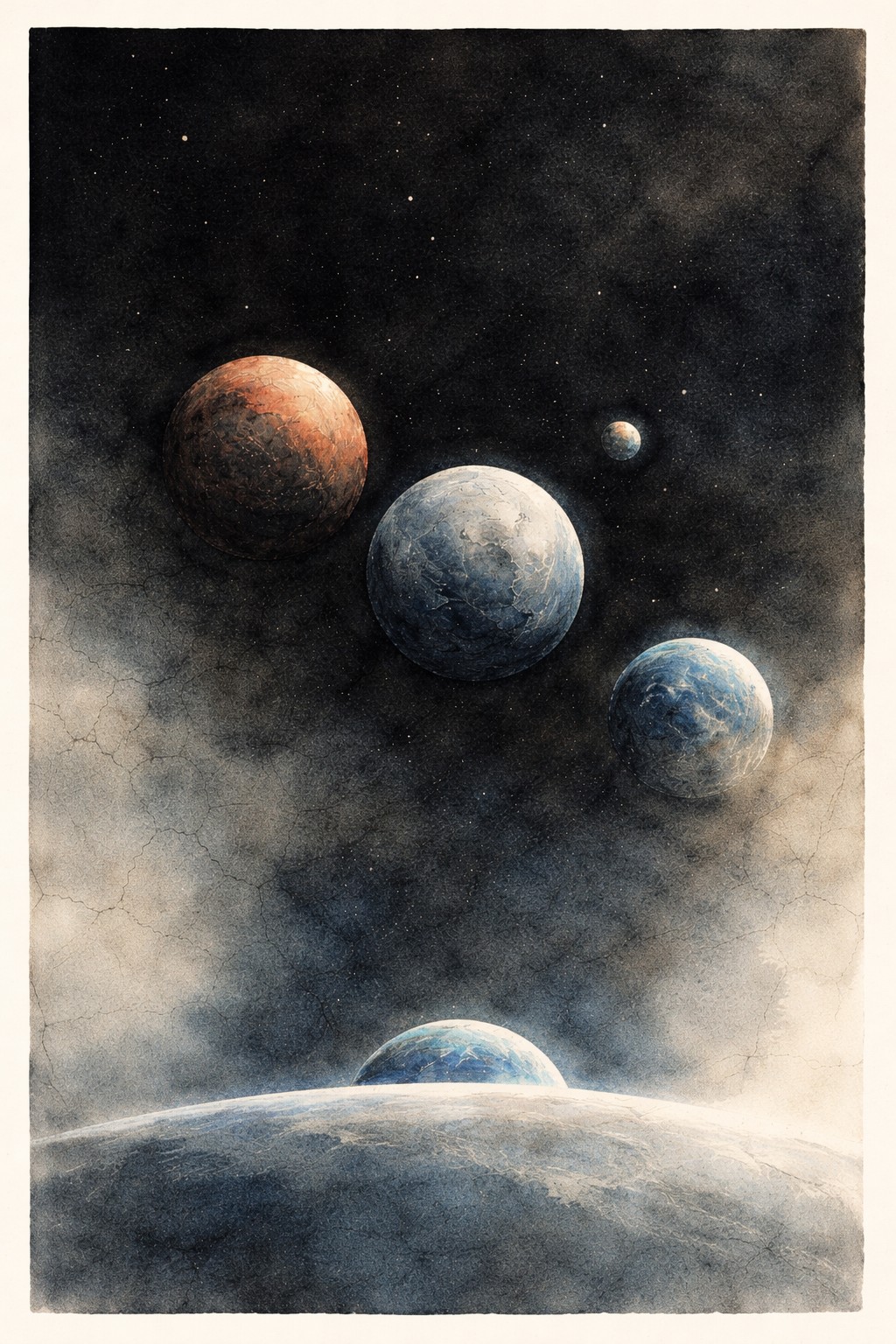
Sagan traces how science has repeatedly humbled human ego. We thought Earth was the center of the universe. Copernicus proved otherwise. We thought the sun was the center. It was not. We thought our galaxy was everything. Hubble showed us billions more.
Each discovery was met with resistance because it challenged human exceptionalism. We wanted to be special. We wanted the cosmos to revolve around us.
But Sagan argues these revelations are not depressing. They are liberating. Understanding our true place allows us to appreciate what we actually are: improbable collections of atoms that became conscious and capable of understanding the universe that made them.
We are stardust that learned to contemplate stars.
The universe has no obligation to make sense to us. And yet it does. The laws of physics that govern distant galaxies are the same laws that govern the motion of your hand as you turn a page. That connection is not trivial. It is miraculous.
Our fragile little egos resist this knowledge. Our short lifespans make it difficult to comprehend. We measure our lives in decades while stars burn for billions of years. We think in terms of nations and centuries while the cosmos thinks in terms of light-years and epochs.
But there is another way to see it. We are the universe becoming aware of itself. Through us, the cosmos has developed eyes to see, minds to wonder, and hearts to feel awe. That is not nothing. That is everything.
Wanderers
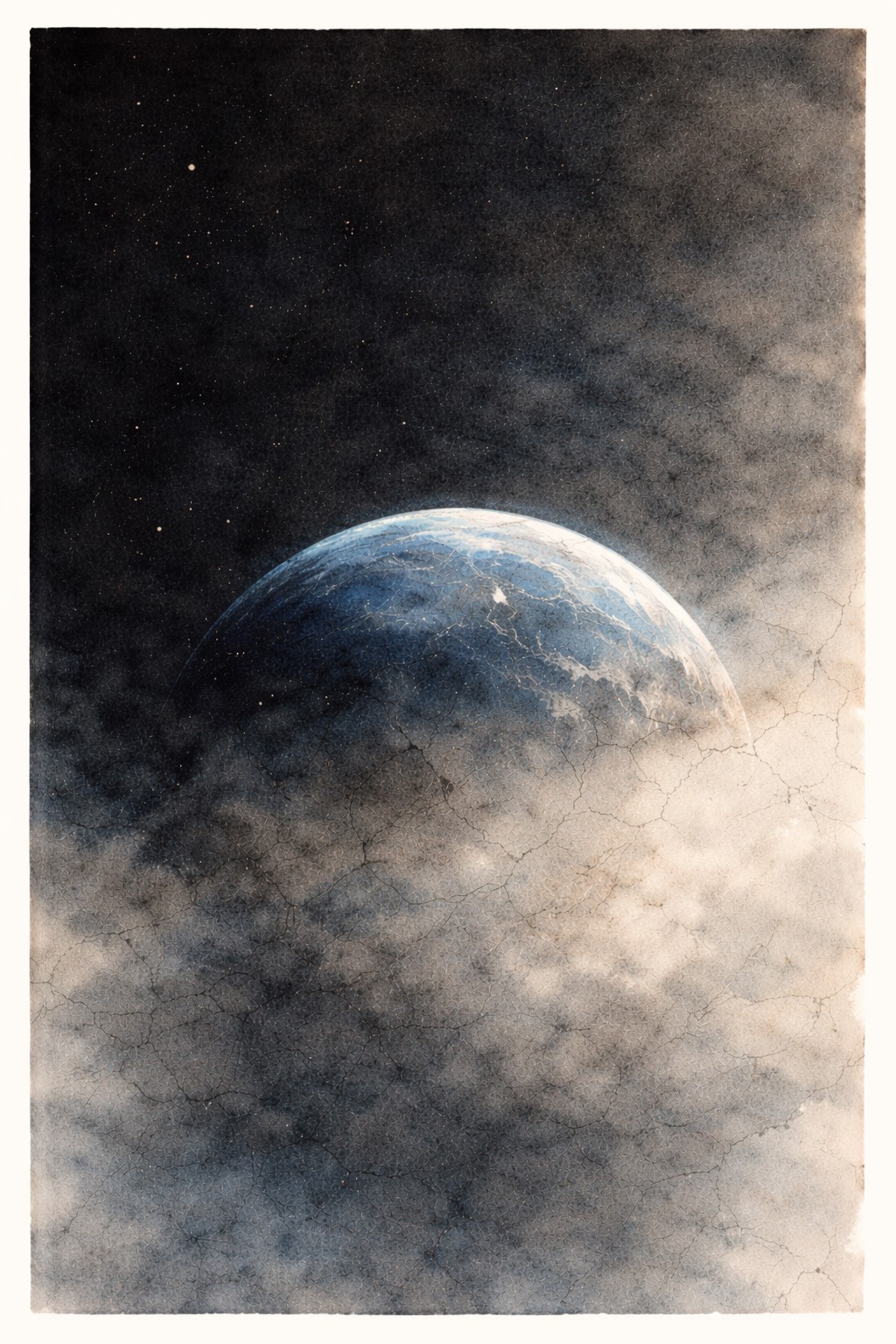
Sagan takes us through our solar system by way of robotic explorers. Voyager. Viking. Mariner. Pioneer. Each planet and moon reveals wonders and harsh truths.
Mars once had water. Rivers carved its surface. Something happened. Now it is cold and dead, or perhaps dormant, waiting.
Venus is a vision of hell. A runaway greenhouse effect turned a planet that might have been like Earth into a furnace where lead would melt.
Europa, one of Jupiter's moons, has more water than all of Earth's oceans combined, locked beneath a shell of ice. Life might swim in those dark waters right now. We do not know. We have not looked.
The message is clear. Earth is special not because the cosmos arranged itself around us. Earth is special because we have not found another place remotely as hospitable. We are lucky beyond measure to live here. And we are fools if we take it for granted.
Who Speaks for Earth?
Here Sagan shifts from wonder to warning. We are damaging our only home. Pollution. Deforestation. Climate change. Nuclear weapons. The pale blue dot is not just beautiful. It is fragile.
But unlike prophets of doom, Sagan couples warning with hope. We have the knowledge and technology to address these challenges. What we lack is will. What we lack is perspective.
The cosmic perspective helps here. Once you see Earth from space, borders seem arbitrary. Once you understand our shared fate, cooperation becomes obvious. We are all on this rock together, and there is nowhere else to go.
Not yet.
To the Stars
The final section makes the case for space exploration not as escapism but as expansion. Sagan argues we have two paths.
We can stay on Earth. Manage resources carefully. Live sustainably. Accept limits. Hope nothing catastrophic happens.
Or we can become spacefaring. Spread to other worlds. Ensure long-term survival. Diversify our holdings in the cosmic lottery.
He advocates for both. Protect Earth and reach for the stars. Not either/or. Both/and.
The arguments are compelling. Single-planet species are vulnerable. Asteroids strike. Supervolcanoes erupt. Pandemics spread. Nuclear weapons exist. Any of these could end human civilization. Spreading to other worlds is not about abandoning Earth. It is about not keeping all our eggs in one basket.
Space exploration also drives innovation that benefits Earth. The technologies developed for the space program have transformed medicine, communications, materials science, and computing. The cosmic perspective itself, made possible by looking back at Earth from space, may be the most valuable gift of all.
When I read this as a college student in the late 1990s, space exploration seemed like a distant dream. The Space Shuttle was aging. Mars was decades away. The vision felt noble but impractical.
Now in 2026, with rockets landing themselves on drone ships, with private companies launching astronauts, with Mars missions on the horizon and Moon bases in planning, Sagan's vision feels prescient. We are finally becoming the spacefaring species he believed we could be.
Why This Book Matters Now
Written in 1994, some of the science has been updated by new discoveries. We now know of thousands of exoplanets. We have detected gravitational waves. We have photographed a black hole. The James Webb Space Telescope has peered deeper into the universe than Sagan could have imagined.
But the core insights are timeless.
Climate change has become more urgent. Sagan's warnings ring louder now.
Space exploration has accelerated. His arguments have been vindicated.
Existential risk has multiplied. AI, biotech, nuclear proliferation. His point about single-planet vulnerability cuts deeper than ever.
And the perspective deficit remains. We are still fighting over borders on our pale blue dot. We are still consumed by tribal conflicts. We are still distracted by the noise of human drama while the cosmos wheels overhead, indifferent to our concerns.
This book offers medicine for that distraction.
The Audio Version
If you can find it, get the audiobook narrated by Sagan himself. His voice is warm, thoughtful, filled with genuine wonder. Listening to him read the Pale Blue Dot passage is a transcendent experience. I have listened to it dozens of times. It has moved me to tears more than once.
There is something about hearing the words from the man who convinced NASA to turn the camera around and take that photograph. He asked for that picture. He understood what it would mean before anyone else. And when he describes what he sees in it, you understand too.
Final Thoughts
This book does something rare. It makes you feel smaller and larger at the same time.
Smaller because you grasp the cosmic scale. Larger because you realize you are part of something magnificent. 13.8 billion years of cosmic evolution produced beings capable of understanding their own origins. That is not trivial.
We are the universe examining itself. We are the cosmos made conscious. We are stardust contemplating stars.
And we live on a pale blue dot suspended in a sunbeam, hurtling through space at 620 kilometers per second toward a destination we cannot see. We forgot we were traveling. This book reminds you.
⭐ Rating: 5/5
Read it. Under the stars if possible. Let the cosmic perspective sink in while you look up at the same universe Sagan describes. It hits different when you are directly connected to what you are reading about.
📖 Buy Pale Blue Dot: A Vision of the Human Future in Space on Amazon
| Feature | Details |
|---|---|
| Title | Pale Blue Dot: A Vision of the Human Future in Space |
| Author | Carl Sagan |
| Publication Year | 1994 (updated 2006 edition available) |
| Genre | Science, Astronomy, Philosophy, Futurism |
| Length | ~384 pages |
| Main Themes | Cosmic perspective, Space exploration, Environmental stewardship, Human future |
| Key Concept | We are in space. Earth is a spacecraft. We forgot. |
| Readability | Beautiful prose. Accessible. Poetic without sacrificing science. |
Related Reading
For more on cosmic perspective and our place in the universe:
- Are Humans Natural or Alien? A Philosophical Exploration - My essay on intelligence, consciousness, and why we seem so different from all other beings
- Cosmic Motion and Human Perspective - A freewriting exploration of our 620 km/s journey through space
This post contains affiliate links. If you purchase through these links, I may earn a small commission at no extra cost to you. Thank you for supporting this blog.