
• 12 min
The Cybernetics Family Tree
I wondered where cybernetics would sit on my O'Reilly shelf. It has no shelf of its own. It sits under all of them. A checked family tree, from the governors to Kubernetes, with your shelf on it.
Long-form thought on AI-assisted development, agent mode, DevOps philosophy, and what changes when the human is three abstraction levels above the code. Some essays lean technical, some lean philosophical; they share the systems-engineering frame.
88 posts • Page 1 of 5
I wondered where cybernetics would sit on my O'Reilly shelf. It has no shelf of its own. It sits under all of them. A checked family tree, from the governors to Kubernetes, with your shelf on it.

Kent Beck wants the genie to bear his toil and leave him his struggle. My first thought: then move the target. Go after what I couldn't reach alone, and the struggle is waiting there.

The rest of my cybernetics reading list has its primers now, from Beer to Boyd: a companion, an audio primer and a printed sheet for every work, shared while I am still learning it.

The hackers didn't understand the machine when they started. That was the point. So why is someone exploring with AI written off for not understanding yet? FORTRAN, the genetic fallacy and a loop.

A fourteen-year-old's robot bug at the MIT AI lab pushed a wallet across a grimy floor while the grad students upstairs wrote theses on why it was hard. The hacker ethic, rewritten for cybernetics, humility and AI as a partner.

I built the smallest loop that could be wrong, to watch a law from Ashby do work. The loop was wrong twice before it was evidence, the law turned out not to apply, and the real cluster already knew the fix. All of it measured, and explained from the ground up.

Most of my essays had gone missing from the page that lists them, on production, and every check passed. The same week turned up five more checks on this site that could not fail. What they had in common.
I let an AI run a music and film studio for a month: render, master, verify, repeat. It mostly worked. Everything that went wrong went wrong the same way: a number that was not measuring what I thought it measured.

The founding papers were too steep and so were my own primers. So here are the gentler ways in: stories and a game to test the water, an hour of free reading, then a shelf of books.
I opened the first paper on my cybernetics reading list and bounced. I had no map of the domain, so I stopped and built one: a primer for every work, in print and audio.

An agent can check a quote for me. It cannot read for me. So before I open Ashby, Wiener and the 1943 paper, here is the list, and what I expect to find, written down first.

I once wrote that our minds run on the same hardware as every other animal and that something rewrote the software. I think the software is culture, the oldest information technology we have.

Change the drag constant in my arcade game by one part in a hundred million and twelve recorded runs stop matching. That strictness is the foundation the replays, the scoreboard, the co-op and the releases all stand on.
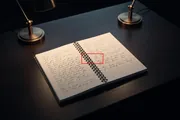
A vision model read the top of my notebook page and filed it under a date eight years off, calmly. One reader cannot flag what it is sure of. So now two models read every page, and I look only where they disagree.

One of my health checks stayed red for eleven weeks by reading its own failure. A loop is the special case of a trajectory, the path that happens to close, and a life does not.

I read a hundred-page atlas of a kingdom I will only ever rent, then logged in and walked it. On studying a territory with a map in one hand, why the first thing the kingdom teaches is to take off the crown, and how it ended at 799.

My AWS flash cards kept evaporating, so I printed the whole study system as a paper packet and the next review nearly doubled. What the research says about a page as a place, and how the exam went.

Development environments lie in two directions. Clone production and it is too expensive to use. Mock it and it is confidently wrong. Here is a third option, and a working hybrid lab that joins a Kubernetes cluster on my laptop to a real Windows host behind a real AWS load balancer for about nine cents an hour.

Three weeks ago I wrote about a script called hello, the one warm door into my system. I kept pulling the thread and the door turned out to be the outermost loop, the one that asks whether the whole thing can still become useful. This is what I found standing behind a greeting: cybernetics, nested watchers, and the rule that intelligence never gets its own hands.

I failed another practice exam today. Same score as my best one, and my best is still a fail. But I finished in half the time and it felt easy in a way it never has, and I think the number is the last thing that moves, not the first.