Complexence
Complexity is the condition of the world. Complexence is the quality you bring to it: the capability of standing inside a system larger than yourself, seeing it whole, and still choosing. A word for the thing all my work has been about.
The Engineering & AI Systems territory. Long-form thought on AI-assisted development, agent mode, DevOps philosophy, and what changes when the human is three abstraction levels above the code. Some essays lean technical, some lean philosophical; they share the systems-engineering frame.
74 posts • Page 2 of 4
Complexity is the condition of the world. Complexence is the quality you bring to it: the capability of standing inside a system larger than yourself, seeing it whole, and still choosing. A word for the thing all my work has been about.
The same tool that can fold a beginner's learning curve shorter can also erase it. AI compresses apprenticeship when it transfers expertise and destroys it when it lets people skip the repetitions that were quietly teaching them.
The subscription is the small line. The real meter is the time you spend feeding context, checking output, catching the confident mistake, and cleaning up the work that looked finished. That hidden labor has a name now: botsitting.
If AWS is math and Kubernetes is physics, then discourse is the physics of other minds, the same live, empirical, pushes-back system, except the matter is a person and the latency is a blank stare. Why the studio and the arena are two different rooms, why the second one floods you, and how to build the faculty that levels the field.
AI is strong in one place and confidently wrong half a step over, and from the inside the two feel identical. The real skill is not prompting. It is knowing when to delegate, when to steer, when to verify, and when to think alone.
The invoice for AI is the cheap part: a seat and some tokens. The real bill arrives in four ledgers: financial, attention, coordination, and development. Why AI makes the individual feel fast while the organization barely moves.
My head does not run in a line, it runs in branches. A tool arrived that does the exact part I cannot do and amplifies the exact part I already do too much. On building with an agent when your attention has its own ideas.
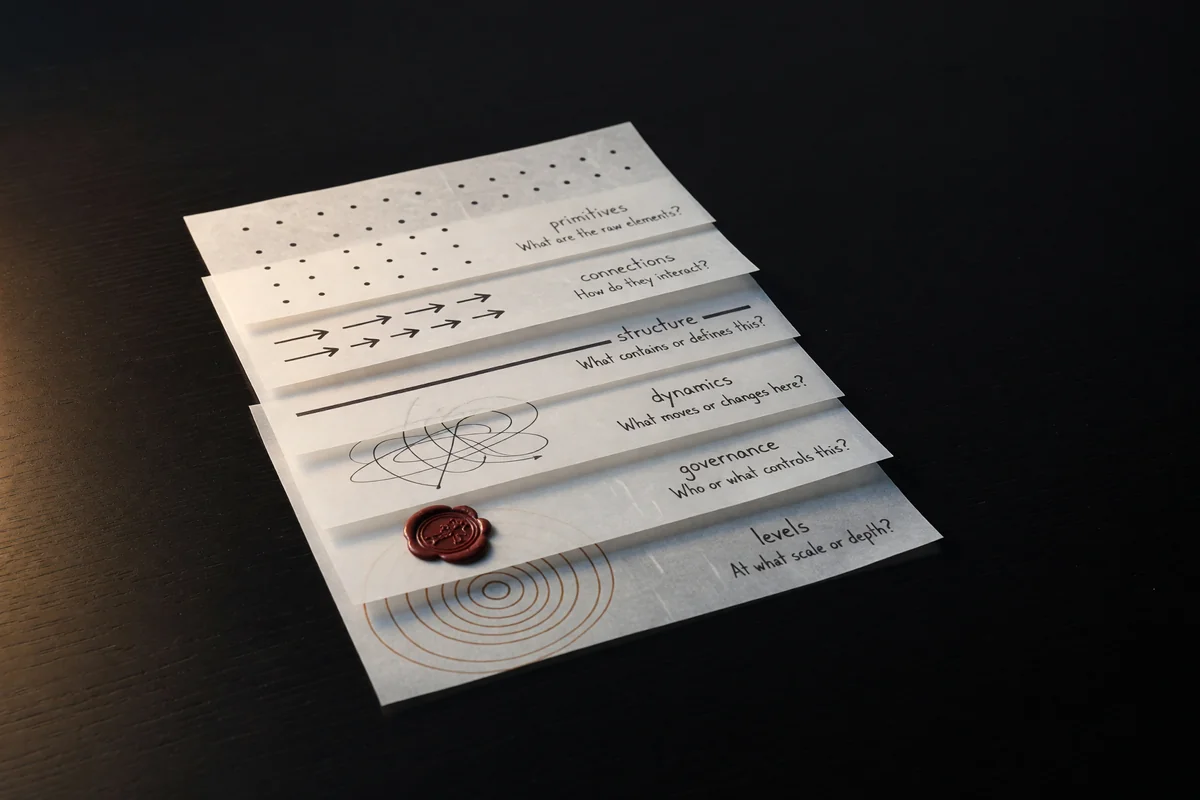
AWS is taught as two hundred services. Underneath it is a handful of primitives, and every service is a frozen answer to a distributed-systems trade-off. The map I built studying for the SAA-C03, and the two questions that decode any new AWS service.
I could already make sound. I could not name it, and you cannot ask for a thing you cannot name. So I asked my music engine for a map. This is that map: sound built in altitudes, and the words that let you climb it.
There are thirty-three repositories in my workspace, and I cannot hold more than two of them in my head at once. They sit side by side in one folder, but it is not a monorepo. Each is its own indepen...
A static site has no server to check a password, which is fine right up until the day you need one. My staging site is the problem in miniature. It is a full mirror of production, except it also carr...
Tesseract could not read a word of it. I have years of handwritten journals, the actual paper kind, and I wanted them on this site. The obvious first move is optical character recognition, and the ob...
There is a 4.8 megabyte TypeScript file in my repository that I did not write. A script writes it, on every build, and I commit the result into git like it was mine. Most build advice would tell me th...
The em dash is the easy one. I can catch every em dash I will ever type with about nine lines of shell, and I do, on every commit. The script walks my published posts and the book chapters and fails ...
A strict Content-Security-Policy on a static site allowlists inline scripts by hash. Change one script, forget to update the hash, and every page renders blank. The incident that taught me, and the deploy guard that ends it.
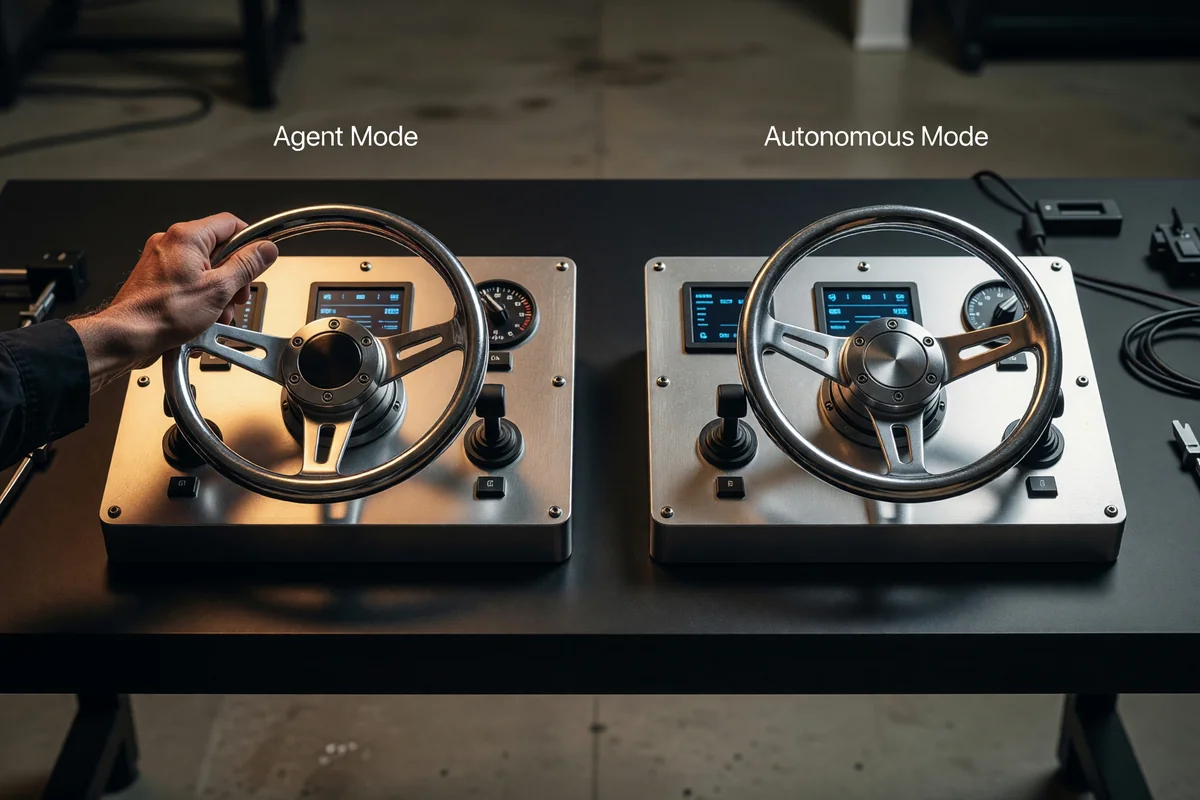
Agent mode and autonomous mode get used interchangeably and they are not the same thing. The difference is who closes the loop: you, after every task, or the system, on a schedule. A working engineer's disambiguation.
Not a tools list. The tools changed three times this year; what changed underneath is where the hours go: specs in the morning, batch review in the afternoon, and the judgment work that never left.
The code got cheap. The review did not. Here is the review workflow I actually use when AI agents write most of the diff: three passes, an adversarial second agent, and the discipline of reading what ships.
A field report from inside sustained agent-mode work: the heat behind the eyes, the way speed bends your sense of time, what it costs the body, and the practice that lets you build at the frontier anyway.
A practical, plain-spoken manual for building software with an AI agent: the setup, the loop, context management, and verified Claude Code and Copilot commands. Written like the old Linux HOWTOs, by someone who runs it daily.