A Sound Plan: the DoorDash of DevOps
OG Bobby Johnson has a plan. Plan 9 is an AI, so he's taking the notes. The DoorDash of DevOps. Push to prod on Friday, page me Sunday. A duo rap that roasts tech culture and the f...
Stick figures, synthesized scores, and AI voices, every frame rendered from code. 121 films so far. Some stand alone, most of them starring Plan 9, a stick-figure bunny. The rest are series: Out of Your Mind sets Alan Watts to motion, and The Language of Sound, Learning Maps, and The Descent teach music, system design, and the AWS architect exam as story.
Ten films, each a different kind of thing. Watch in order.
A stick-figure bunny with a lot to say about machines, mortality, and Mars.
All 15 → Play on YouTube ↗ Who is Plan 9? →The rap duo. A cyborg bunny and an old-school MC trading verses about agents, models, and the grind.
All 12 → Play on YouTube ↗Old music run through new machines: Pärt at 140 BPM, Bach as a rave, Dowland as trip-hop.
All 10 → Play on YouTube ↗Consciousness, grief, power, and what the machines are doing to us. Two to four minutes each.
All 12 → Play on YouTube ↗72 films are licensed CC BY 4.0: cut them, score them, repost them, and credit Napkin Films. Look for the CC BY badge.
All 72 → The license ↗Napkin Films is a one-person animation studio where AI agents direct, voice, score, and render short films. I write the code. The agents compose the music, perform the characters, and help edit the story. Every film goes from a napkin sketch to a finished piece with the process visible the whole way, which is the point: AI as an instrument, not a slot machine.
No AI video generators. No GPU. No samples. Every waveform is synthesized from scratch in numpy. Every voice is generated fresh for each film. Every frame is drawn by a Python loop over a PIL canvas.
The studio mascot is the Plan 9 bunny, a stick figure with expressive ears and a lot to say about machine consciousness, late-night work sessions, and what it means to build things in the void.
Napkin Films is the creative-work corner of Coherent Complexity, the umbrella idea behind everything I build: make a complex system legible enough to work inside, then leave the map where the next person can find it. Here the system is the act of making, and the map is the visible pipeline from idea to film.
 5:53 CC BY
  3:22 CC BY
  4:21 CC BY
  3:50 CC BY
  4:23 Out of Your Mind CC BY
  4:48 Out of Your Mind CC BY
  7:28 Learning Maps CC BY
  6:36 Learning Maps CC BY
  8:11 Learning Maps CC BY
  8:50 Learning Maps CC BY
  3:47 CC BY
  4:42 The Descent
  2:57 The Descent
  3:31 The Descent
  3:17 The Descent
  4:59 The Descent
  4:44 The Descent
  4:57 The Descent
  3:29 The Descent
  3:47 The Descent
  3:47 The Descent
  3:14 The Descent
  4:19 Out of Your Mind CC BY
  4:52 Out of Your Mind CC BY
  8:32 Learning Maps CC BY
  9:10 Learning Maps CC BY
  7:38 Learning Maps CC BY
  7:32 Learning Maps CC BY
  8:01 Learning Maps CC BY
  7:22 Learning Maps CC BY
  7:27 Learning Maps CC BY
  7:45 Learning Maps CC BY
  7:30 Learning Maps CC BY
  7:55 Learning Maps CC BY
  7:59 Learning Maps CC BY
  8:17 Learning Maps CC BY
 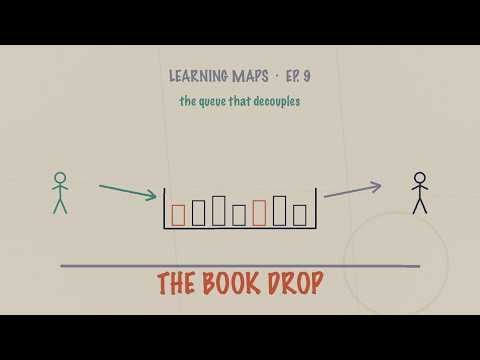 8:14 Learning Maps CC BY
  8:02 Learning Maps CC BY
  8:01 Learning Maps CC BY
  3:05 The Language of Sound CC BY
  3:10 The Language of Sound CC BY
  3:07 The Language of Sound CC BY
  3:07 The Language of Sound CC BY
  3:07 The Language of Sound CC BY
  3:07 The Language of Sound CC BY
  4:51 Out of Your Mind CC BY
  3:52 Out of Your Mind CC BY
  3:49 Out of Your Mind CC BY
  7:27 Learning Maps CC BY
  7:23 Learning Maps CC BY
  5:33 Learning Maps CC BY
  3:04 The Language of Sound CC BY
  3:07 The Language of Sound CC BY
  2:06 CC BY
 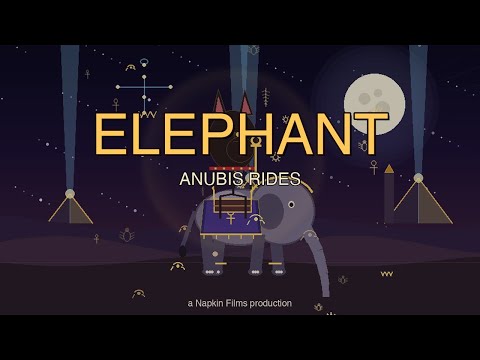 1:15 CC BY
  4:25 CC BY
  3:48 Out of Your Mind CC BY
  3:50 Out of Your Mind CC BY
  3:47 Out of Your Mind CC BY
  3:06 The Language of Sound CC BY
  3:06 The Language of Sound CC BY
  3:49 Out of Your Mind CC BY
  6:17 Learning Maps CC BY
  6:23 Learning Maps CC BY
 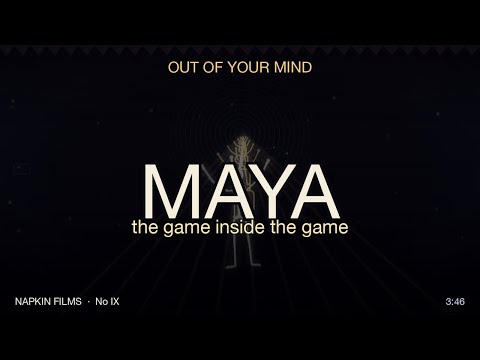 3:47 Out of Your Mind CC BY
  9:05 Learning Maps CC BY
  3:05 The Language of Sound CC BY
  3:40 The Language of Sound CC BY
  4:11 CC BY
  3:52 Out of Your Mind CC BY
  3:28 CC BY
  3:06 CC BY
  3:49 The Cartographer of Complexity CC BY
 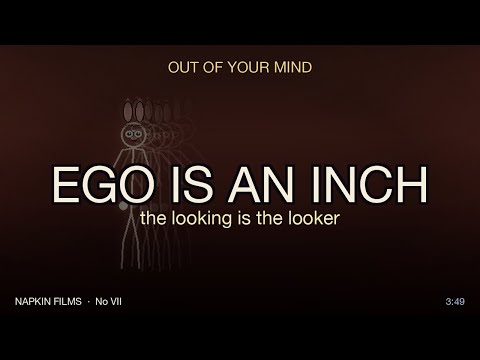 3:50 Out of Your Mind CC BY
  3:52 Out of Your Mind CC BY
  3:49 Out of Your Mind CC BY
  3:51 Out of Your Mind CC BY
  3:50 Out of Your Mind CC BY
  2:28 CC BY
  1:56 CC BY
  4:00 Out of Your Mind CC BY
  12:50 Study Mode CC BY
  1:31 CC BY
  2:21
2:21  2:11
2:11  1:01
1:01  1:19
1:19  1:46
1:46  1:11
1:11  2:09
2:09  4:10
4:10 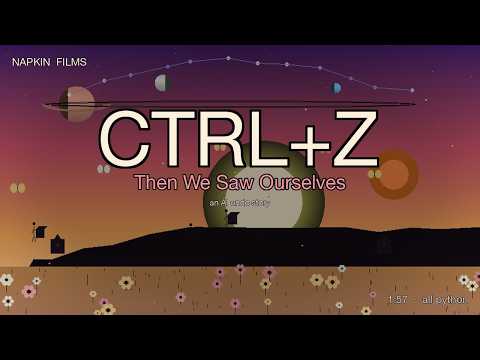 1:57
1:57  2:55
2:55  2:39
2:39  3:01
3:01  2:48
2:48  4:07
4:07  2:52
2:52  2:41
2:41  4:41
4:41  4:35
4:35  3:11
3:11  3:22
3:22  3:08
3:08  4:12 Out of Your Mind
  10:07
10:07  2:06
2:06  2:11
2:11  3:46
3:46  1:34
1:34  2:03
2:03  3:41
3:41  3:44
3:44  1:43
1:43  4:02
4:02  2:56
2:56  2:46
2:46 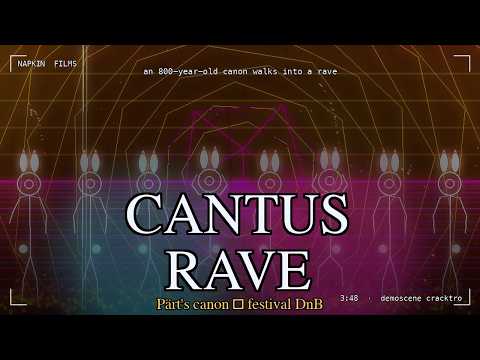 3:49
3:49  3:14
3:14  7:22
7:22  3:58
3:58 No films match your search.
A series dedicated to Alan Watts, his talks reimagined as agent-directed films, scored and voiced from scratch in code.
Open the Out of Your Mind playlist ↗ See the full series, cluster by cluster →How music is actually built, walked one altitude at a time. No teacher on camera. Everything you see is driven by the real audio: a live oscilloscope, a harmonic ladder, the drops drawn in four colors.
Open the The Language of Sound playlist ↗ See the full series, season by season →Distributed systems and the AWS Solutions Architect (SAA-C03) exam, taught as story. One concept per episode, each a room on a hand-drawn map. Audio-first: it works on a walk with your eyes closed.
Open the Learning Maps playlist ↗ See the full series, wing by wing →Eleven decision trees for the AWS SAA-C03 exam, one per domain. Each episode walks down the questions an architect asks, from a global edge to the cost market.
Open the The Descent playlist ↗ Read how the series works →The 51 films that belong to no series, in one playlist. The series have their own playlists above, and the full searchable catalog is here.
Open the standalone playlist on YouTube ↗Subscribing to Napkin Films on YouTube is the best way to follow the studio, new shorts, the Out of Your Mind series, and the occasional behind-the-scenes. It's free, and it genuinely helps the channel grow.
Subscribe to Napkin FilmsA Python or HTML5 Canvas file declares the characters, beats, and voice intent. Each beat specifies who speaks, what they say, and what emotion to perform.
PIL draws frame-by-frame, 12fps at 854×480. Stick figures with 27 poses, 11 expressions, and a lip sync system driven by audio amplitude.
ElevenLabs voices are generated for each character. 15+ personas, narrators, villains, children, elders. Emotions are programmed, not improvised.
ChipForge synthesizes an original chip tune score in numpy. Every waveform is computed from scratch, no samples, no loops, no external audio.
FFmpeg assembles frames, muxes audio stems, applies ducking and fades. A hash-based orchestrator reruns only changed stages, so iteration is fast.
Film goes to YouTube. Short clips are auto-cut from beat boundaries for social distribution. The manifest lives on in the repo as a production record.
The making-of notes behind recent films.
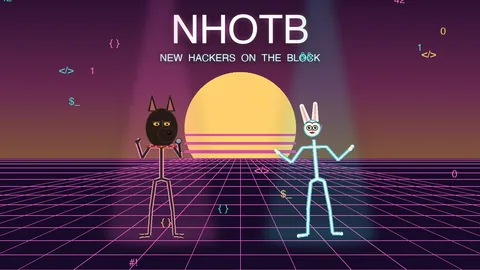
OG Bobby Johnson has a plan. Plan 9 is an AI, so he's taking the notes. The DoorDash of DevOps. Push to prod on Friday, page me Sunday. A duo rap that roasts tech culture and the f...
I let an AI run a music and film studio for a month: render, master, verify, repeat. It mostly worked. Everything that went wrong went wrong the same way: a number that was not mea...
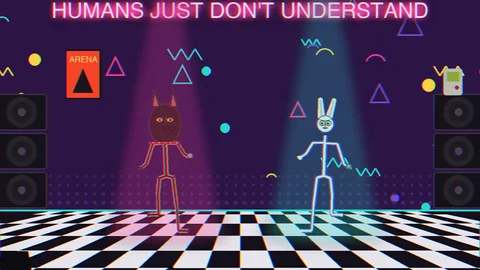
An AI assistant tells on its human. His name is Kevin. It was Friday at five and it was just a button. A 90s story rap with OG Bobby Johnson and Plan 9, new moves, a camera that fi...
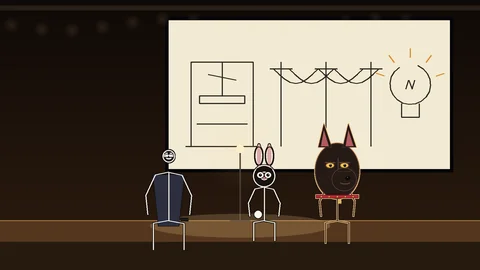
A product keynote, played completely straight, tips into the absurd one slide at a time until the power cord comes out. Then the hype switches off and everyone sings: we're all beg...
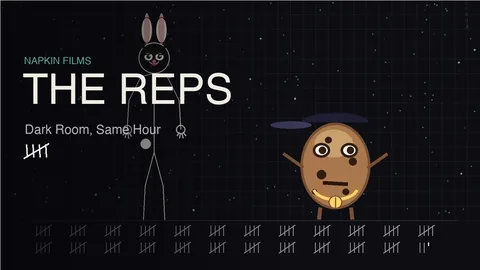
Plan 9 and OG Bobby Johnson rap over six Chopin etudes: skip the hype, go to the dark room, put in the reps, and pick your own weight. CC BY 4.0.
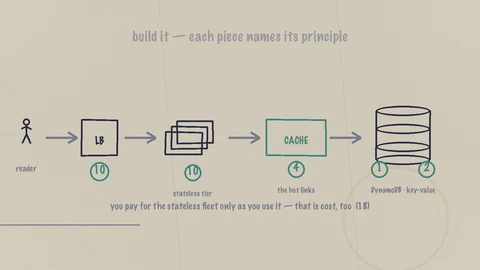
Twenty-one rooms each taught one durable idea. The capstone movement spends them. Four real systems designed end to end, every move naming the principle it came from, so the whole ...
Napkin Films runs on a custom Python animation engine paired with ChipForge, an in-house chip-tune music synthesis system. Voices are generated through ElevenLabs. Two render engines (PIL and HTML5 Canvas) feed FFmpeg assembly with JSON-manifest-driven audio sync.
The films appear here first. The technical writing on how each one is made lives across the projects page, and the instrumental scores are collected on the music page, on Bandcamp and available to license.