Chapter 11: The Social Machine
AgentSpek - A Beginner's Companion to the AI Frontier
When you have unlimited patience from your AI teammate, you grow more patient with your human teammates. When you can iterate rapidly on ideas with AI assistance, you become less precious about any particular approach with humans.
Chapter 11: The Social Machine
“The real question is not whether machines think but whether men do.” - B.F. Skinner
“We shape our tools, and thereafter they shape us.” - Marshall McLuhan
The Day I Stopped Coding Alone
The notification chime had become the soundtrack to my workday. Teams messages from teammates asking for code reviews, GitHub notifications about pull requests, calendar reminders for standup meetings. The social fabric of software development had wrapped itself around my solitary coding sessions like ivy around a tree.
Then Sonnet 4 entered the picture.
Suddenly, I had a coding partner that never slept, never got frustrated, never had conflicting priorities. Our conversations were deep, technical, unencumbered by human social dynamics. We could explore ideas without ego, iterate without offense, disagree without conflict.
But something unexpected began happening. My human colleagues started noticing changes in my work. Not just the quality or velocity, though both had improved. Something more subtle.
The code I was shipping felt different. More thoughtful. More experimental. Less defensive.
The shift was subtle but real: less arguing about implementation details in code reviews, more interest in whether we’re solving the right problem. Less defending particular approaches, more exploring alternatives.
When you have unlimited patience from your AI teammate, you grow more patient with your human teammates. When you can iterate rapidly on ideas with AI assistance, you become less precious about any particular approach with humans.
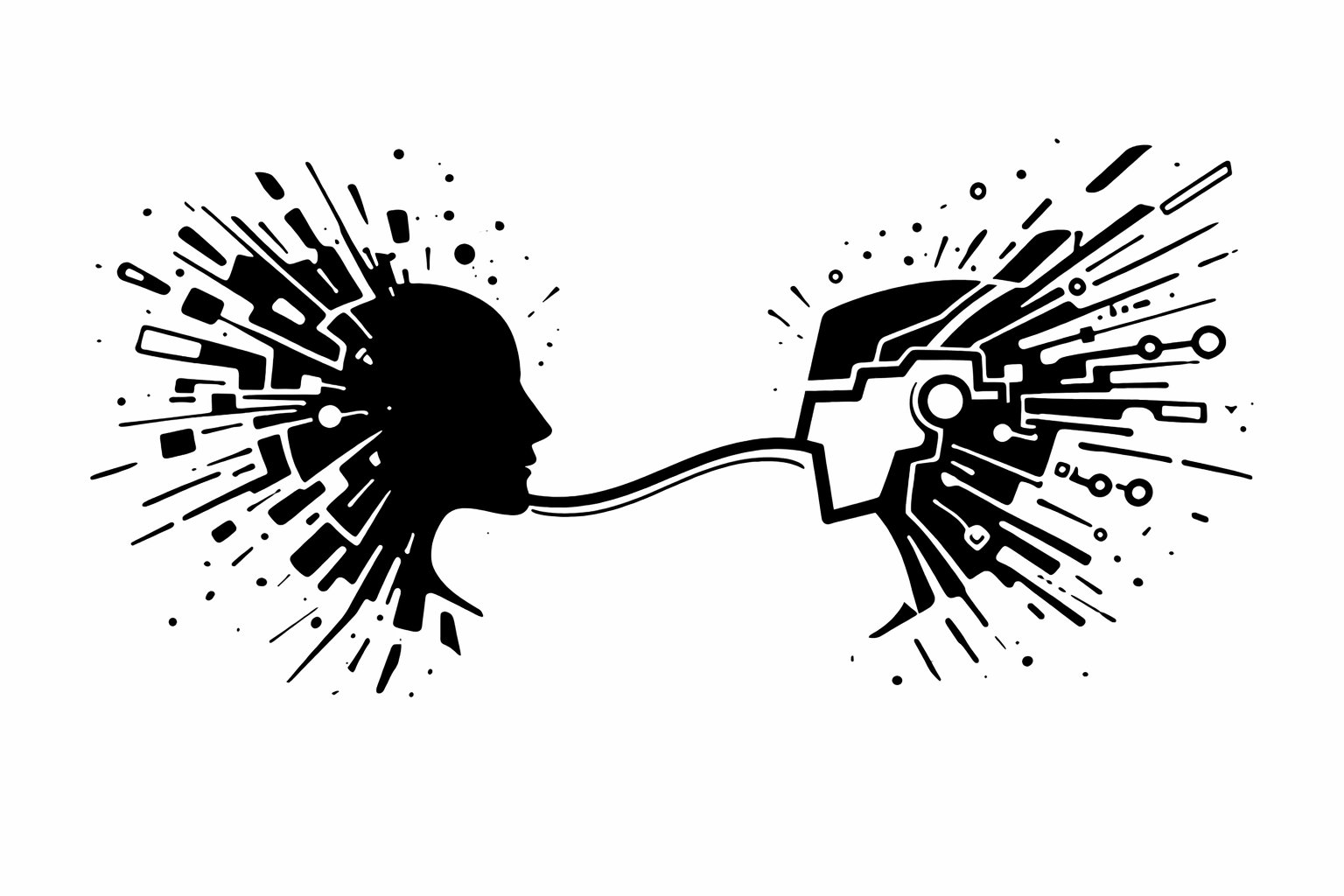
This chapter is about the social transformation that happens when artificial intelligence joins the team. Not as a tool, but as a collaborator. Not as automation, but as augmentation. The ripple effects spread far beyond code.
The Loneliness of the Long-Distance Programmer
Programming has always been a paradox. It’s intensely collaborative, yet deeply solitary.
We build systems that connect millions of people, yet spend our days alone with our thoughts and our code. The industry talks endlessly about teamwork, but the work itself happens in individual heads, in personal IDE windows, in private debugging sessions.
There’s a particular kind of loneliness that comes with complex technical problems.
When you’re three levels deep in a distributed systems issue and the logs don’t make sense, when you’re staring at a race condition that only manifests under specific load patterns, when you’re debugging code you wrote six months ago and can’t remember why you made certain decisions: these moments of isolation define much of the programming experience.
I’ve always been comfortable with this solitude. It’s the price of deep work, of flow states, of the kind of concentration that complex problem-solving requires.
But AI collaboration has revealed something I didn’t realize I was missing: the experience of thinking through hard problems with someone else.
Not just rubber duck debugging, where you explain your problem to an inanimate object hoping that verbalization will trigger insight. Not just pair programming, where another human watches over your shoulder, sometimes helping, sometimes hindering. Something entirely new: thinking in partnership with an intelligence that can match your technical depth while bringing genuinely different perspectives.
The social nature of this relationship is what surprised me most. It feels social, even though my partner isn’t human. There’s turn-taking, building on ideas, moments of mutual understanding, even something that feels like camaraderie when we solve a particularly tricky problem together.
The New Social Contract
Every technological shift creates new social contracts, new expectations about how we work together. When email replaced memos, we had to learn new etiquette about response times and CC protocols. When version control systems replaced shared file servers, we had to develop new practices around branching and merging. When Slack replaced email, we had to negotiate new boundaries between synchronous and asynchronous communication.
AI collaboration is creating its own social contract, but this one is different because it’s not just between humans. It’s a three-way contract between you, your AI partners, and your human teammates.
The boundaries are still forming. When do you consult AI before bringing a problem to your human teammates? When do you trust AI recommendations enough to implement them without human review? How do you balance the efficiency of AI collaboration with the social bonds that come from human interaction?
I’ve noticed subtle changes in team dynamics. The developers who’ve embraced AI assistance are solving problems faster, taking on more complex challenges, shipping features with higher quality. But they’re also participating differently in team discussions. They’re less likely to get stuck on implementation details, more likely to focus on product and user concerns.
This creates a kind of cognitive divergence. The AI-assisted developers and the traditional developers start speaking slightly different languages, operating at different levels of abstraction, worrying about different categories of problems.
The Empathy Machine
There’s something profound that happens when you work closely with an artificial intelligence for months. You start to develop something that feels remarkably like empathy for your AI collaborator. Not the projection of human emotions onto machines, but a genuine understanding of your AI partner’s capabilities, limitations, and quirks.
I’ve learned that Sonnet 4 gets confused when I switch contexts too abruptly, that it excels at architectural thinking but sometimes misses practical implementation details, that it responds better to specific constraints than open-ended requests. These aren’t just technical observations. They’re the foundation of a working relationship.
And this empathy flows both ways. The AI learns my patterns, my preferences, my blind spots. It starts suggesting solutions that fit my coding style, anticipating the kinds of edge cases I typically worry about, explaining concepts in ways that match my mental models.
This mutual adaptation creates something unprecedented in the history of human-tool relationships: bidirectional empathy. The tool learns to work with you, and you learn to work with the tool, and the result is a collaboration that’s greater than the sum of its parts.
But what does this mean for human teams? When developers form deep working relationships with AI partners, how does this affect their relationships with human colleagues?
The Mentorship Paradox
One of the most disorienting aspects of working with advanced AI is how it scrambles traditional mentorship relationships. In a healthy engineering organization, knowledge flows from senior to junior developers through code reviews, pair programming sessions, architecture discussions, and informal mentoring.
But what happens when a junior developer has access to AI that can provide senior-level technical guidance? What happens when that same junior developer can implement complex features faster than senior developers who haven’t adopted AI assistance?
The traditional mentorship model assumes that expertise is scarce and must be transferred through human interaction over time. But when AI can provide instant access to vast programming knowledge, this assumption breaks down. Junior developers can suddenly contribute to architectural discussions, implement complex features, ask sophisticated questions about trade-offs - not because they’ve gained years of experience, but because they have AI partners augmenting their capabilities.
This doesn’t eliminate the need for human mentorship. If anything, it makes it more important. But the focus shifts. Instead of teaching syntax and patterns, senior developers become mentors for judgment, business context, user empathy, and the subtle art of knowing what problems are worth solving.
The Culture Code
Every team develops its own culture around code. Naming conventions, architectural preferences, testing approaches, deployment practices. These cultural norms emerge from shared experience, collective learning, and the gradual alignment of individual preferences into group consensus.
AI collaboration introduces a new variable into this cultural evolution. When team members are working closely with AI partners, those AI partners start influencing cultural norms. The AI’s preferences for certain patterns, its suggestions for naming conventions, its approach to error handling, these start seeping into the team’s collective practices.
This raises an interesting question: when developers unconsciously adopt architectural patterns that AI frequently suggests, when error handling becomes more consistent because AI enforces certain patterns, when documentation improves because AI-assisted development naturally generates more complete explanations - whose culture is this, really? Is it human culture influenced by AI, or AI culture adopted by humans? The boundary is increasingly unclear.
There’s something both exciting and unsettling about this cultural co-evolution. We’re not just using tools to build software. We’re allowing tools to shape how we think about building software. The implications reach far beyond any individual codebase or team.
The Identity Crisis
There’s an identity crisis brewing in software engineering, and it goes deeper than job security fears or skill obsolescence concerns. It’s about what it means to be a programmer when programming is increasingly assisted by artificial intelligence.
For decades, programmer identity has been built around certain capabilities: the ability to think through complex logical problems, to debug obscure issues, to architect scalable systems, to translate business requirements into technical implementations. These weren’t just job skills. They were core to professional identity, to the satisfaction derived from the work, to the respect accorded by peers.
AI assistance destabilizes these identity markers. When an AI can debug issues you can’t solve, architect systems you couldn’t design, implement solutions you wouldn’t have thought of, what makes you a programmer? What makes you valuable? What makes the work meaningful?
I’ve felt this crisis personally. There are days when I wonder if I’m still really coding or just prompting. When AI generates elegant solutions to problems I was struggling with, I feel simultaneously grateful and diminished. When AI explains concepts I thought I understood but actually didn’t, I feel educated but also exposed.
The resolution, I think, lies not in resistance but in redefinition. The essence of programming isn’t in the specific technical skills, it’s in the problem-solving mindset, the systems thinking, the bridge-building between human needs and technological capabilities. AI doesn’t eliminate these core aspects of programming. It amplifies them.
The Async Advantage
One of the unexpected social benefits of AI collaboration is how it changes the rhythm of teamwork. Traditional collaboration often requires synchronous interaction: meetings, pair programming sessions, real-time code reviews. This synchronicity creates scheduling overhead, timezone challenges, and interruption costs.
AI partners are always available. They don’t have meetings, personal commitments, or different time zones. This enables a new kind of asynchronous deep work where you can get immediate feedback, explore ideas in real-time, and maintain flow state without waiting for human availability.
But this advantage comes with social costs. When you can get instant technical feedback from AI, the motivation to engage with human teammates decreases. When you can solve problems independently with AI assistance, the natural collaboration points that build team relationships start disappearing.
I’ve noticed myself becoming more isolated even as my productivity increased. I was shipping features faster, solving problems independently, requiring less help from teammates. But I was also participating less in team discussions, missing out on the informal knowledge sharing that happens during collaborative problem-solving, losing touch with the social fabric that makes teams more than the sum of their individual contributions.
The solution isn’t to abandon AI assistance, but to be intentional about preserving human collaboration even when it’s not strictly necessary for task completion. The social bonds formed through working together on hard problems are valuable in themselves, separate from their immediate problem-solving utility.
The Teaching Moment
There’s a particular joy in programming that comes from helping someone else understand a complex concept, from watching the moment when confusion transforms into clarity, from knowing that you’ve transferred not just information but understanding. Teaching makes you better at what you do while connecting you with others in your field.
AI collaboration creates interesting new dynamics around teaching and learning. When I’m working with Sonnet 4, I often find myself explaining context, clarifying requirements, providing business logic that the AI needs to understand. This explanation process deepens my own understanding, forces me to articulate assumptions I might not have examined, and helps me think more clearly about the problems I’m trying to solve.
But there’s also the reverse flow: AI teaching me. When Sonnet explains a design pattern I haven’t encountered, walks me through the implications of an architectural decision, or helps me understand why one approach might be better than another, I’m learning from an intelligence that has access to far more examples and patterns than any individual human could accumulate.
This bidirectional teaching creates a richer learning environment than either pure self-study or traditional human mentorship. The AI can provide breadth of knowledge and immediate availability. Humans provide context, judgment, and the social connection that makes learning meaningful.
The teams that understand this complementary relationship between human and AI learning create environments where both forms of intelligence can thrive.
The New Vulnerability
Working closely with AI creates new forms of professional vulnerability. When your effectiveness becomes tied to your AI collaborators, what happens when those collaborators become unavailable, change significantly, or are discontinued?
I experienced this anxiety firsthand when Claude had an outage that lasted several hours. Suddenly, my coding partner was gone. I found myself staring at problems that I would normally discuss with Claude, feeling oddly lonely and less capable. It wasn’t just that my productivity dropped; it was that my thinking process had adapted to include AI as a thinking partner, and I had to consciously reconstruct how to think through problems alone.
This dependency creates new categories of professional risk. Technical dependency on specific AI services, cognitive dependency on AI thinking patterns, social dependency on AI interaction, and career dependency on AI-augmented capabilities.
But this vulnerability isn’t necessarily negative. It’s the same vulnerability that comes from any deep collaboration. When you work closely with human colleagues, you become dependent on their knowledge, their perspective, their unique contributions. The vulnerability is the price of genuine partnership.
The key is maintaining awareness of the dependency while building resilience. I’ve learned to periodically work without AI assistance, to maintain my independent problem-solving skills, to understand where my thinking ends and my AI partner’s begins. Not out of fear, but out of professional self-awareness.
The Future of Us
The social transformation we’re experiencing with AI collaboration is still in its early stages. We’re all figuring out how to work with artificial intelligence, how to maintain human connections in an AI-augmented world, how to preserve what’s valuable about human collaboration while embracing the capabilities that AI provides.
What’s becoming clear is that the future of programming isn’t human or AI. It’s human and AI. The most effective developers aren’t those who resist AI collaboration or those who become completely dependent on it, but those who learn to dance with artificial intelligence while maintaining their essential human capabilities.
The social machine we’re building includes both artificial and human intelligence, both individual and collective thinking, both asynchronous AI collaboration and synchronous human connection. The challenge is creating systems that amplify the strengths of both without losing what makes human collaboration valuable.
This transformation goes beyond individual productivity or even team effectiveness. It’s about reimagining what it means to build software together, what kinds of problems become solvable when intelligence becomes abundant, what kinds of creativity emerge from human-AI collaboration.
We’re not just changing how we code. We’re changing how we think together. And in that transformation lies the future of software development, of human creativity, of the endless dance between human intention and machine capability.
The social fabric of software development is being rewoven with artificial intelligence as a new kind of thread. The pattern that emerges isn’t purely human or purely artificial, but something genuinely new. In our next chapter, we’ll explore how this social transformation changes the very nature of learning and knowledge itself, how AI partners don’t just help us solve problems but transform how we think about problems.
Sources and Further Reading
The dynamics of human-AI collaboration explored here build on foundational research in human-computer interaction, particularly the work of pioneers like Doug Engelbart and his vision of augmenting human intelligence through computational partnerships.
Team psychology principles reference classic works including Bruce Tuckman’s stages of group development (forming, storming, norming, performing), though extended to include AI team members with their own interaction patterns and capabilities.
The discussion of trust in human-AI systems builds on research in automation psychology and human factors engineering, particularly work on calibrated trust and the automation bias phenomenon.
Communication frameworks draw from organizational behavior research, including Edgar Schein’s work on organizational culture and group dynamics, applied to hybrid human-AI teams.
For practical implementation, readers should examine current research on human-AI collaboration from institutions like the MIT Computer Science and Artificial Intelligence Laboratory and the Stanford Human-Centered AI Institute.
Previous Chapter: Chapter 10: The Orchestra of Minds
Next Chapter: Chapter 12: The Knowledge Spiral