Shoe Dog: A Memoir by the Creator of Nike by Phil Knight
I'm listening to the audiobook edition while working, and Phil Knight's voice (through the narrator) feels like sitting with someone who built something extraordinary but hasn't quite processed how extraordinary it was. Shoe Dog isn't a typical business memoir full of manufactured wisdom and cleaned-up origin stories. It's messy, honest, and human; exactly what you need when you're in the grind yourself.
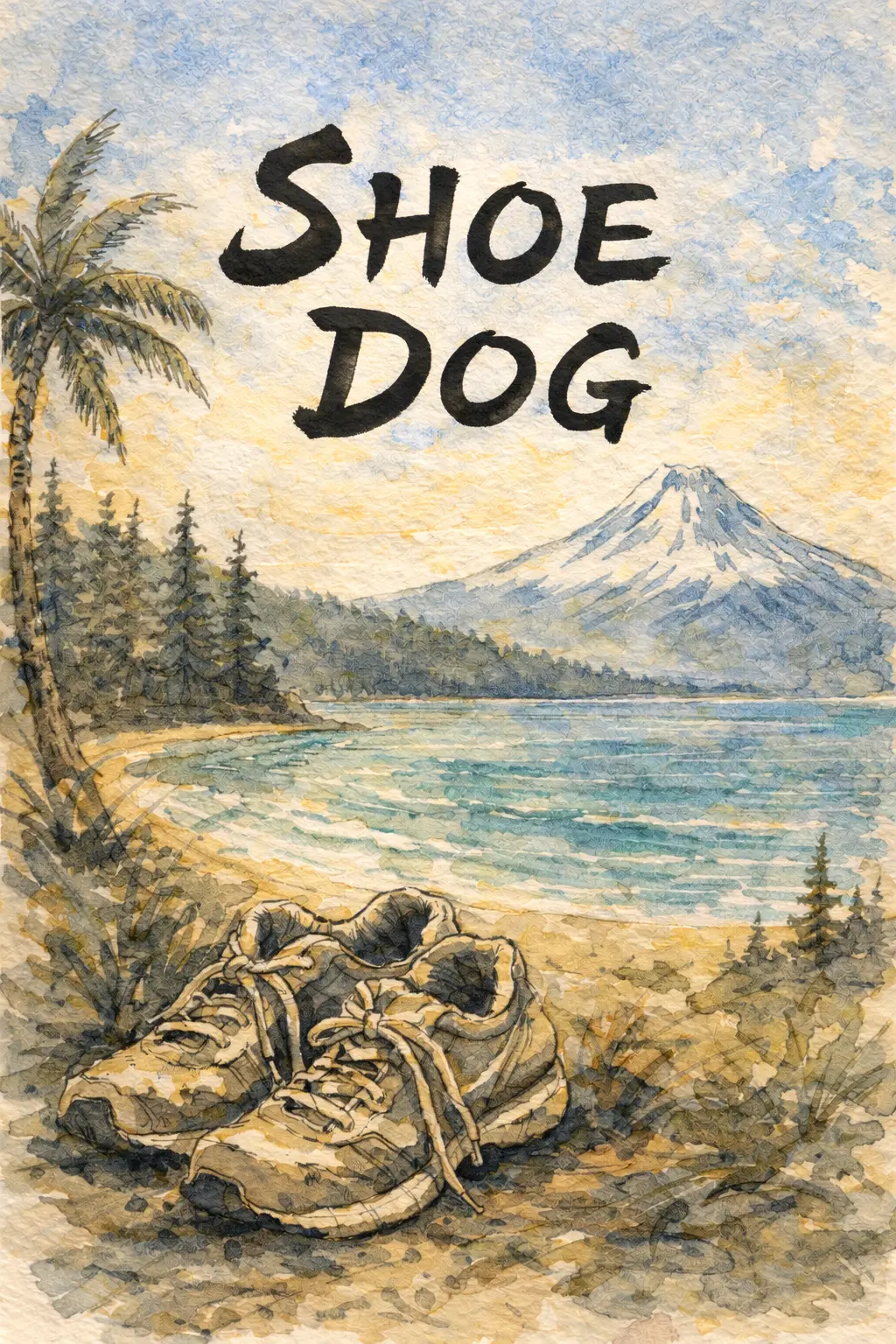
The Book About Building Nike That Feels Nothing Like Nike Marketing
Introduction: Listening While Building
I'm listening to the audiobook edition of Shoe Dog while working on my own projects. Something about Phil Knight's voice (through the narrator) feels right for this format. Not polished. Not inspirational-speaker energy. Just a guy telling you what it was actually like to build Nike from $50 borrowed from his dad to a billion-dollar company.
Here's what strikes me immediately: Knight doesn't sound like he decided to build Nike. He sounds like he stumbled into it, made it up as he went, nearly went bankrupt multiple times, and somehow ended up creating one of the most recognizable brands on the planet. That messiness is the entire point.
But here's what really hooks me: This isn't just a business book. It's a love letter to running.
I'm a runner. There's something magical about running in the sun, on trails, alone with your thoughts and the rhythm of your feet. On good days, high-energy days when everything feels right with the universe, I dance while running. I twirl. It's bliss: pure, uncomplicated joy. Knight gets this. He lived this.
Reading Shoe Dog while being a runner yourself hits different. Knight wasn't just selling shoes; he was part of a running culture, a community of people who found something transcendent in the simple act of putting one foot in front of the other. That reverence for the sport, for runners, for what running means: it's woven through every page.
This isn't Built to Last or Good to Great with retrospective frameworks extracted from success stories. This is "I had no idea what I was doing, my bank kept threatening to cut me off, my partners were weird and difficult, and somehow we made it work." Raw entrepreneurship, not the mythology.
Reading this (well, listening) in 2026 while trying to build things myself, the timing feels perfect. Every cash flow crisis Knight describes, every moment of "we're about to lose everything," every relationship strain from overwork and stress, resonates. Not because I'm building Nike, but because the fundamental experience of creating something from nothing contains universal patterns.
Why this book matters now:
Honesty over mythology: Most business books clean up the story. Knight doesn't. He admits mistakes, personality flaws, lucky breaks, and near-failures.
Cash flow reality: The entire book is basically one long cash flow crisis interrupted by brief moments of "we might make it." Every entrepreneur needs to understand this rhythm.
Team dynamics: Nike wasn't built by Phil Knight alone. It was built by a weird collection of obsessive people who somehow worked together despite (because of?) their differences.
Timing and luck: Knight is refreshingly honest about how much timing and luck mattered. Hard work was necessary but not sufficient.
The grind compounds: There's no single breakthrough moment. Nike became Nike through relentless iteration, relationship building, and not quitting when quitting made sense.
For anyone building anything (business, creative project, system, whatever), this book provides ground truth about what creation actually feels like. Messy, uncertain, exhausting, exhilarating. (Buy on Amazon)
Book Details at a Glance
| Feature | Details |
|---|---|
| Title | Shoe Dog: A Memoir by the Creator of Nike |
| Author | Phil Knight, Founder of Nike |
| Publication Year | 2016 |
| Genre | Memoir, Business, Entrepreneurship |
| Length | ~400 pages (audiobook: ~13 hours) |
| Time Period Covered | 1962-1980 (founding through IPO) |
| Main Themes | Entrepreneurship, Cash flow management, Team building, Manufacturing, Brand creation, Risk-taking, Persistence |
| Key Insight | Building a global brand is messy, uncertain, relationship-driven, and constantly on the edge of failure |
| Audiobook Quality | Excellent - narrator captures Knight's understated, slightly bemused tone perfectly |
| Who Should Read? | Entrepreneurs, startup founders, anyone building something, business students, people romanticizing entrepreneurship who need reality |
The Boring Years Nobody Talks About
Here's what most Nike brand mythology skips: the first decade was boring in the way only retail distribution and cash flow management can be boring.
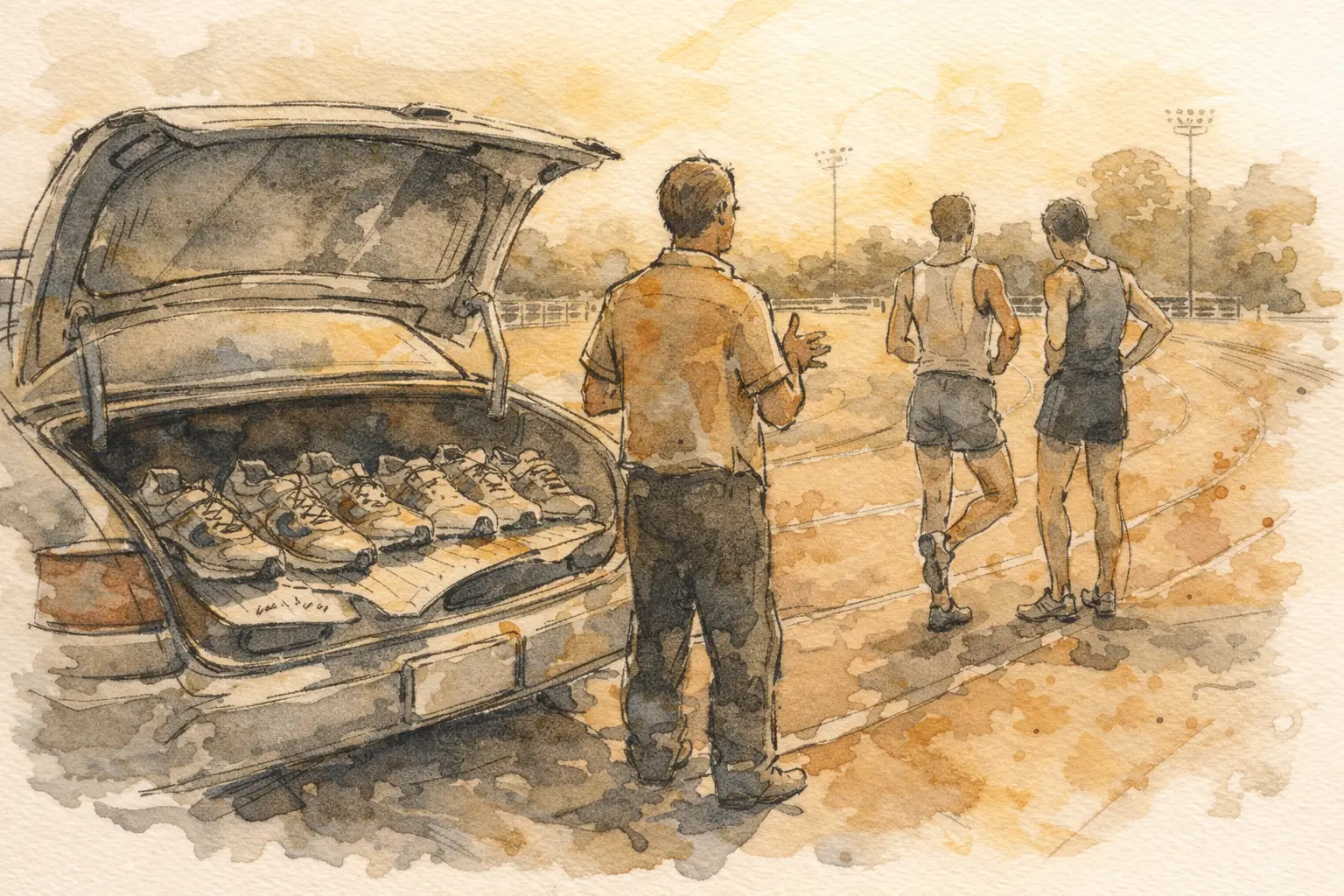
Knight started by importing Japanese running shoes (Onitsuka Tigers) and selling them out of his car at track meets. Not glamorous. Not innovative. Just arbitrage with better products than what American companies offered.
For years this was the entire business model:
- Order shoes from Japanese manufacturer
- Wait months for shipment
- Sell shoes before payment to manufacturer was due
- Use revenue to order next shipment
- Repeat while constantly running out of cash
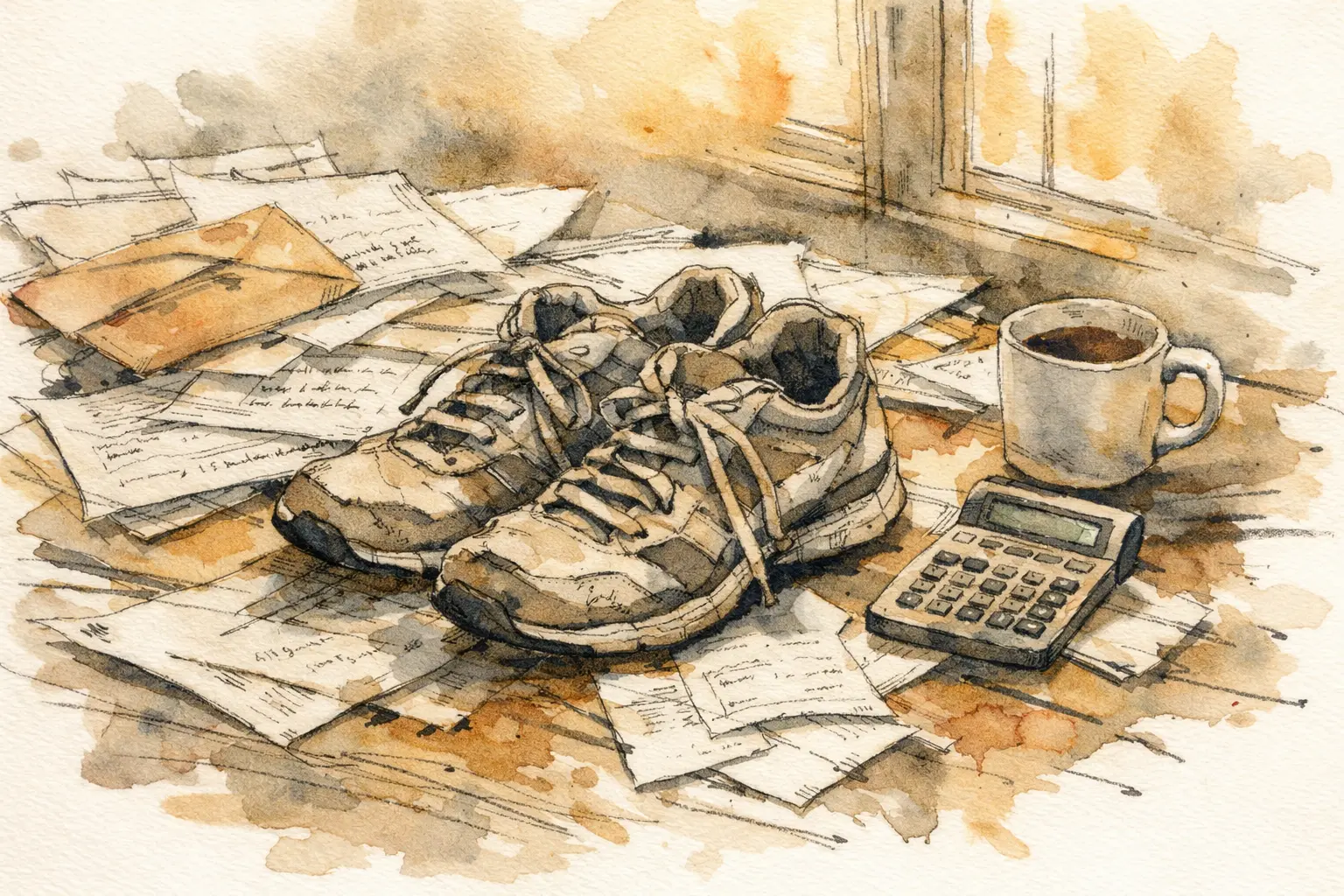
This went on for a decade. Not one year, not two. A decade of constantly being 30-60 days from bankruptcy because the bank wouldn't extend enough credit for inventory.
Why this matters: The mythology says "find your passion and success will follow." The reality Knight describes is "find something you care about enough to endure years of grinding stress for uncertain payoff." Very different proposition.
My parallel: Building systematic processes for anything (trading, writing, data systems) follows this pattern. The first iterations are boring, fragile, barely functional. You iterate for months or years before anything feels solid. Most people quit during the boring phase, before compounding kicks in.
The discipline Knight showed (showing up every day to manage inventory, chase payments, negotiate with manufacturers) echoes Admiral McRaven's Make Your Bed philosophy. Do the small, unsexy things right. Daily. For years. Let that compound.
The Bank as Antagonist
One of the book's running themes: Knight's relationship with his bank was basically a decade-long hostage situation.
The bank would extend credit lines, then suddenly cut them. Promise support, then threaten to pull funding right when Nike needed it most. Question every decision while understanding nothing about the business.
Knight describes multiple moments where Nike's entire future depended on convincing some skeptical loan officer to extend credit for another 60 days. Not venture capital, not strategic investors. Just "please let us buy enough shoes to fill our orders so we can pay you back."
The cash flow trap: Growing faster meant needing more inventory. More inventory meant more debt. More debt meant more bank scrutiny and tighter terms. Success created the conditions for failure.
Reading this while thinking about systematic process design, there's a parallel: position sizing and cash management are everything. Renaissance Technologies' sophisticated risk management allowed them to scale. Nike's cash flow problems nearly killed them despite growing revenue.
The lesson: Revenue growth without cash flow management is just accelerated path to bankruptcy. Boring financial discipline enables everything else.
The Team Nobody Would Hire: Johnson and Bowerman
Nike's early team was wonderfully weird. But two characters stand out as the obsessive engines that powered everything: Jeff Johnson and Bill Bowerman. I see myself in all three: Johnson's detail obsession, Bowerman's mad scientist experimentation, and Knight's strategic vision of building something bigger than any of them understood at the time.
Jeff Johnson: The Obsessive Conscience
Johnson is my favorite character in this whole story. Obsessive, manic, wrote letters to Knight constantly: pages and pages of ideas (most bad, some brilliant), complaints, observations, passionate arguments about shoe design and marketing. We're talking multi-page manifestos about shoe designs, marketing concepts, complaints about operations, philosophical observations about running and life.
Knight describes being overwhelmed by the sheer volume and intensity. But Johnson was right more often than not because he understood runners intimately. He was one of them. We runners are a particular breed; we understand what matters in a shoe because we're out there logging miles. Johnson channeled that knowledge relentlessly.
Johnson opened Nike's first retail store in Santa Monica. He became customer service, marketing, product development, and Nike's conscience all rolled into one relentlessly enthusiastic person. The California chapters where Knight describes Johnson's operation are hilarious: this guy was living Nike 24/7, to the point of absurdity and genius.
Listening to these sections while running myself, I get it. Johnson wasn't just selling shoes; he was serving fellow runners, people who understood what good shoes meant. That passion came from actually being part of the culture.
Why Johnson resonates: His obsessive attention to detail, his inability to let small things go, his compulsion to document everything and share every observation; that's not a bug, that's the feature. Building anything significant requires at least one person who cares about the details to an irrational degree.
Bill Bowerman: The Mad Scientist
Then there's Bowerman. Knight's former Oregon track coach, cantankerous genius, impossible to work with, absolutely irreplaceable. If Johnson was Nike's conscience, Bowerman was its mad scientist.
The waffle sole story is legendary: Bowerman literally poured rubber into his wife's waffle iron one Sunday morning, destroying the appliance but creating one of Nike's breakthrough innovations. That's not strategic product development; that's a coach so obsessed with making better shoes for his athletes that he's experimenting in his kitchen.
But it wasn't just the waffle sole. Bowerman was constantly tinkering, testing, ripping apart shoes, rebuilding them lighter, trying new materials. He wasn't doing this for Nike's profitability or market share. He was doing it because he coached runners and knew that better shoes mattered. Every ounce of weight, every improvement in cushioning, every adjustment to stability: these weren't academic exercises. They affected whether his athletes won or lost.
Knight describes Bowerman as difficult, stubborn, argumentative. But that cantankerous energy came from caring so deeply about craft and performance that compromise felt like betrayal. He wasn't building shoes for marketing purposes; he was building better tools for athletes because craftsmanship mattered to him existentially.
Why Bowerman resonates: The mad scientist experimenter who can't stop tinkering, who sees every product as a prototype to improve, who drives everyone crazy with constant modifications but produces genuine breakthroughs; that's not just Bowerman. That's the archetype of the obsessive maker. He reminds me of the best developers I know: they can't leave working code alone because it could be better, faster, more elegant.
The Accountants and Operations People
And quieter but essential: the accountants and operations people who kept the chaos organized enough to function. They don't get the glory, but without them managing the crushing complexity of growth, cash flow, and logistics, Nike dies in 1970.
Why This Team Worked
What strikes me listening to this: Knight didn't hire based on credentials or traditional qualifications. He hired people who were obsessed, showed initiative, and could tolerate ambiguity and stress. More importantly, he hired runners; people who understood the culture he was serving.
The three archetypes:
- Knight: Strategic visionary, sees the bigger picture, navigates business complexity
- Johnson: Obsessive detail-oriented executor, never lets anything slide, documents everything
- Bowerman: Mad scientist innovator, experiments constantly, cares about craft above all
I recognize all three in myself depending on the day or the project. Sometimes I'm Knight trying to see the strategic path through chaos. Sometimes I'm Johnson obsessing over small details that matter. Sometimes I'm Bowerman tinkering with systems because they could be better, should be better, must be better.
The magic is when you get all three working together, even when (especially when) they drive each other crazy.
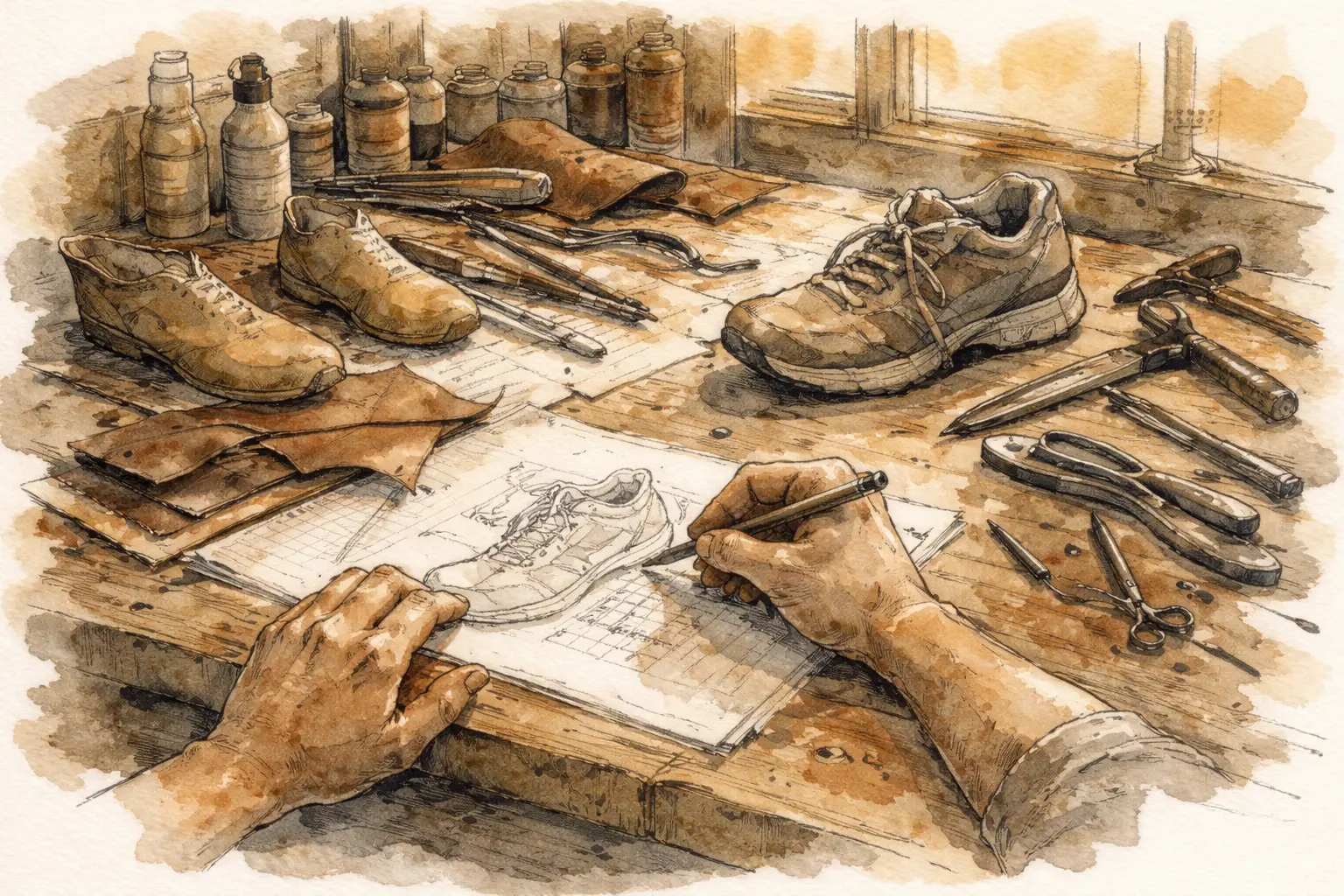
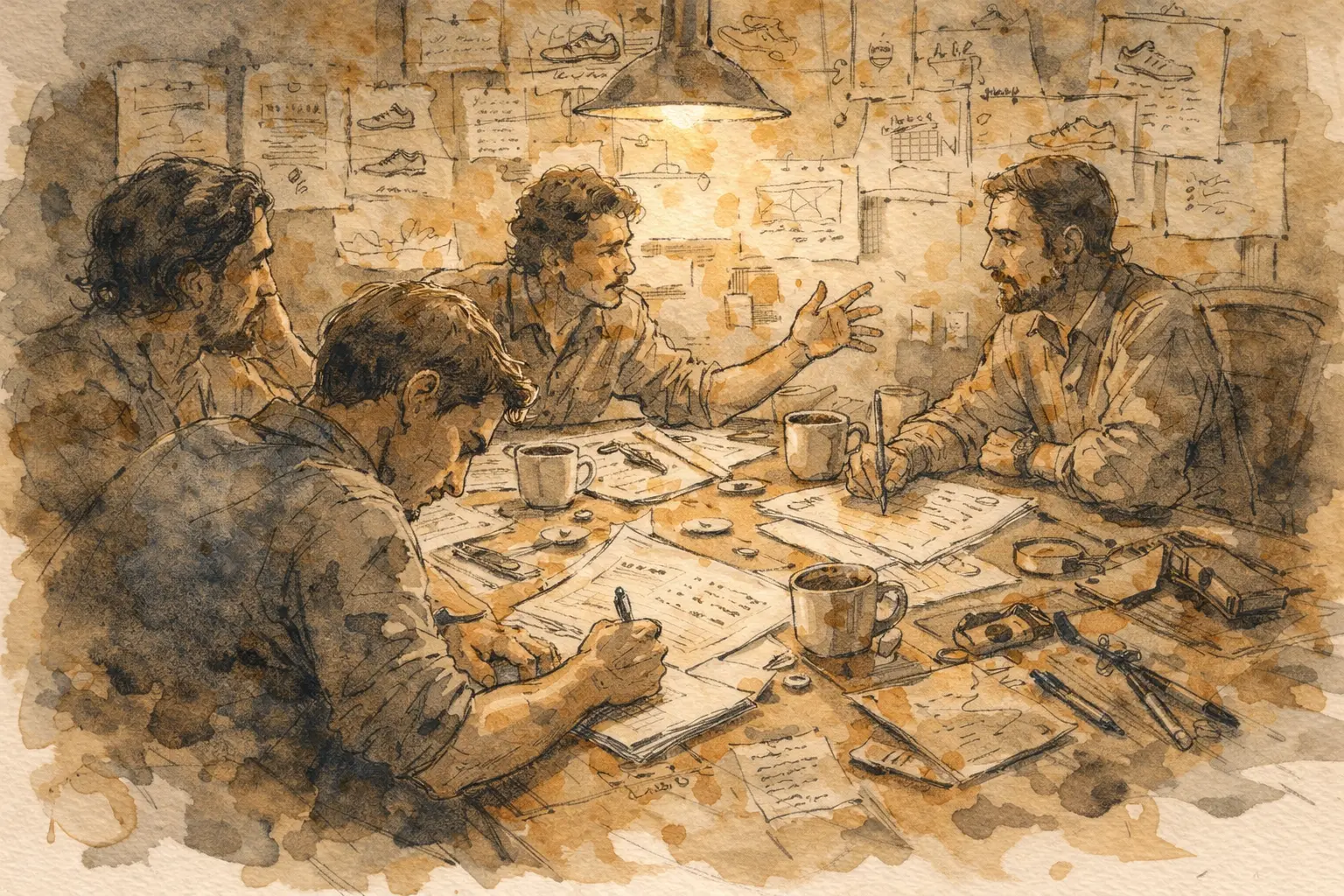
The Friday meetings: Knight describes their end-of-week gatherings where this motley crew would drink, argue passionately about shoe designs and strategy, and somehow align on next steps despite disagreeing about everything. These weren't corporate meetings; these were passionate people who cared, arguing about what mattered.
Why teams of obsessives work: You can't build anything significant with people who just want a paycheck. You need individuals who care irrationally. Johnson cared about runners and running shoes to an almost comical degree. Bowerman cared about craft and performance to the point of home experimentation. That obsession built Nike's culture. The friction this creates is part of the process, not a bug to eliminate.
The runner's perspective: Knight and his team weren't outsiders trying to sell to runners. They were runners. They understood the magic of a good run, the transcendence of finding your rhythm, the community that forms around shared miles. That authenticity came through in everything they built.
Manufacturing and the Japan Relationship
A huge portion of the book focuses on Knight's relationship with Onitsuka (the Japanese manufacturer) and later the transition to manufacturing Nike's own designs.
The Onitsuka relationship was fraught: cultural differences, communication difficulties, contract disputes, and eventually betrayal when Onitsuka tried to cut Nike out and establish their own US distribution.
The pivot: When the Onitsuka relationship fell apart, Nike had to:
- Find new manufacturers (Taiwan, Korea)
- Design their own shoes (Bowerman's designs)
- Create their own brand (the swoosh, the Nike name)
- Build direct relationships with athletes
This forced independence was terrifying at the time but became Nike's foundation. They weren't distributors of someone else's product anymore; they were a brand.
Listening to this in 2026: The entire manufacturing landscape is different now. But the principle holds: dependency on a single supplier or partner is existential risk. Diversification isn't just financial theory; it's survival.
The swoosh: Knight admits he wasn't thrilled with Carolyn Davidson's logo design at first. Paid her $35. Used it anyway because they needed something. The most recognizable logo in sports came from "good enough, ship it."
Perfectionism kills momentum. Ship what's good enough, iterate, improve.
The Personal Cost
Knight is surprisingly honest about what building Nike cost personally:
His marriage: Strain from constant stress, long hours, travel.
His children: Barely present during their early years, regrets about missing moments.
His health: Stress-related issues, weight gain, exhaustion.
His relationships: Friendships neglected, family tensions, isolation.
The book doesn't moralize about this. It doesn't say "worth it" or "not worth it." It just admits the cost and lets you draw conclusions.
Reading this while building: Every entrepreneur hears "follow your passion" and "build something meaningful." Nobody mentions the stress-induced health problems, relationship strain, and years of feeling like you're failing at everything except the one thing you're obsessively focused on.
Knight's honesty here is valuable. Not to discourage entrepreneurship, but to set realistic expectations. Building something significant costs. Count the cost before starting.
The Unexpected Ending (No Spoilers)
Without spoiling specifics for those who haven't read it, the book's epilogue provides updates on the key people from the Nike story. Where they ended up, what happened after Nike went public, what Knight learned looking back.
What hit me hardest: Knight's reflections on what mattered and what didn't. Decades later, with billions in the bank and a global empire, what he values isn't what you'd expect.
The takeaway: Success doesn't resolve everything. The journey matters as much as the destination. The relationships forged in crisis outlast the business achievements.
Audiobook Format: Perfect for This Story
I'm listening rather than reading, and the audiobook format works beautifully for this material.
Why audiobook fits:
- Knight's voice (through narrator) feels conversational, not formal
- The pacing works well for audio: crisp, forward-moving narrative
- You can listen while doing other work, which feels appropriate for a book about someone who worked constantly
- The informal tone translates better to audio than dense text might
Narrator quality: Norbert Leo Butz captures the slightly bemused, understated tone perfectly. Not overly dramatic. Not flat. Just right.
Listening strategy: I'm doing it in chunks. Listen to a few chapters, pause to think about parallels to my own work, resume. The episodic structure (each chapter roughly covers a year or major event) works well for this approach.
What the Book Gets Right (And What's Missing)
What Knight Nails
Honesty about failure: Multiple moments where Nike almost died. No sanitized "we overcame adversity" platitudes; real fear, real uncertainty.
Team credit: Knight consistently credits the people around him. This wasn't a solo genius story.
Luck acknowledgment: Freely admits when timing, luck, or external factors saved them.
Personal cost: Doesn't gloss over what building Nike cost in terms of health, relationships, sanity.
Writing quality: The prose is clean, unpretentious, and moving when it needs to be.
What's Missing (Completely Understandable)
The later years: Book ends at IPO in 1980. Nike's next four decades (controversies, globalization, brand evolution) are barely mentioned.
Labor practices: The book predates major critiques of Nike's manufacturing labor practices. Those issues aren't addressed.
Market dominance: Nike becoming a dominant player changed the dynamics. The scrappy underdog story is compelling; the market leader story would be different.
Other perspectives: This is Knight's story. Other team members might tell it differently.
None of these gaps make the book less valuable. But they're worth noting for complete context.
Principles Extracted for My Own Work
Listening to this while building my own projects, here's what I'm taking away:
1. Cash Flow > Revenue
Revenue growth means nothing if you can't fund operations. Knight learned this the hard way repeatedly. I'm applying this to personal finance, project planning, and strategic decisions: always know where the cash comes from and when it's needed.
2. Relationships Are Infrastructure
Nike's early success came from Knight's relationships with athletes, coaches, retailers, manufacturers. Those relationships were built slowly, maintained carefully, and occasionally saved the company.
My version: The relationships I'm building now (with collaborators, readers, partners) are infrastructure for future work. Invest in them before you need them.
3. Ship Before You're Ready
The swoosh logo for $35. Shoe designs that were "good enough." Marketing that was functional, not perfect. Knight shipped constantly despite uncertainty.
My version: Publish before it feels ready. Deploy before all bugs are fixed. Launch before you're comfortable. Iteration beats perfection.
4. Teams Need Obsessives
Competent, reasonable people are fine for established systems. Breakthrough work requires people who care irrationally and obsess over details nobody else notices.
My version: When building something new, work with people who care too much. The friction that creates is productive.
5. The Boring Middle Contains the Real Work
Years of importing shoes, managing cash flow, dealing with banks. Not glamorous. Absolutely essential. Most people quit during the boring middle.
My version: The systematic work (logging trades, documenting processes, building infrastructure) is where real compounding happens. Don't skip the boring parts.
Final Thoughts
⭐ Rating: 5/5 - Essential reading (or listening) for anyone building anything. Not for the business lessons (though those exist), but for the honest depiction of what creation feels like.
This isn't a how-to manual. It's a memoir by someone who built something extraordinary while often feeling lost, scared, and uncertain. That honesty makes it valuable precisely because it's not prescriptive.
Runners: seriously, if you run, you need to read this
- Anyone romanticizing startup life who needs reality check
- Business students who only see polished case studies
- People building anything who need reassurance that uncertainty is normal
- Anyone who finds magic in athletics and wants to understand building around that culture
- Business students who only see polished case studies
- People building anything who need reassurance that uncertainty is normal
- Fans of honest memoir regardless of business interest
Who can skip this:
- People looking for specific tactical business advice
- Those wanting Nike's later history (post-1980)
- Anyone uninterested in entrepreneurship or business narratives
Why audiobook works particularly well:
- Conversational tone translates perfectly to narration
- Can listen while working (fitting for a book about someone who worked obsessively)
- The pacing and episodic structure suit audio format
- Narrator captures the slightly bemused, understated voice perfectly
How I'm using this:
- Listening during work sessions as background reinforcement
- Pausing to extract specific principles or parallels
- Letting the narrative remind me that uncertainty is part of building, not evidence of failure
This book gave me something I didn't know I needed: permission to be uncertain while building. Knight built Nike despite (because of?) not having everything figured out. That's encouraging not in a simplistic "you can do it!" way, but in a "uncertainty is the medium you work in, not a problem to solve" way.
📖 Buy Shoe Dog: A Memoir by the Creator of Nike on Amazon
Related Reading
If the entrepreneurship, discipline, and building-through-uncertainty themes resonate:
Make Your Bed by Admiral McRaven - The daily discipline that Knight practiced for years. Small things done consistently compound into massive results.
The Man Who Solved the Market - Systematic process, risk management, and building teams of obsessives. Renaissance and Nike solved different problems with similar approaches.
Antifragile by Nassim Taleb - Knight built an antifragile company: one that gained from stressors, volatility, and setbacks. The constant near-bankruptcy experiences made Nike stronger.
Companion books:
- The Hard Thing About Hard Things by Ben Horowitz (modern startup parallel)
- Creativity, Inc. by Ed Catmull (Pixar's building story)
- The Lean Startup by Eric Ries (systematic approach to uncertainty)
For runners: If you love the running culture that Nike helped build, check out the complete Running Book Quartet:
Part 1: The Philosophical Runner
What I Talk About When I Talk About Running by Haruki Murakami. Running as meditation, creativity, and self-discovery.
Part 2: The Scientific Adventure
Born to Run by Christopher McDougall. Evolutionary running science, the Tarahumara tribe, and the barefoot movement.
Part 3: The Competitive Legend
Pre: Steve Prefontaine's Story by Tom Jordan. Running as art, amateur athletics, and the relentless pursuit of excellence. Knight knew Pre personally and was deeply affected by his death.
Part 4: The Business of Running (This Post)
Shoe Dog by Phil Knight. How a love of running built Nike and changed sports culture forever.
Together, these four books cover the mind (Murakami), body (Born to Run), spirit (Pre), and business (Shoe Dog) of running.
This post contains affiliate links. If you purchase through these links, I may earn a small commission at no extra cost to you. Thank you for supporting this blog!