Decan 9: The Brightest Star Is the Closest One
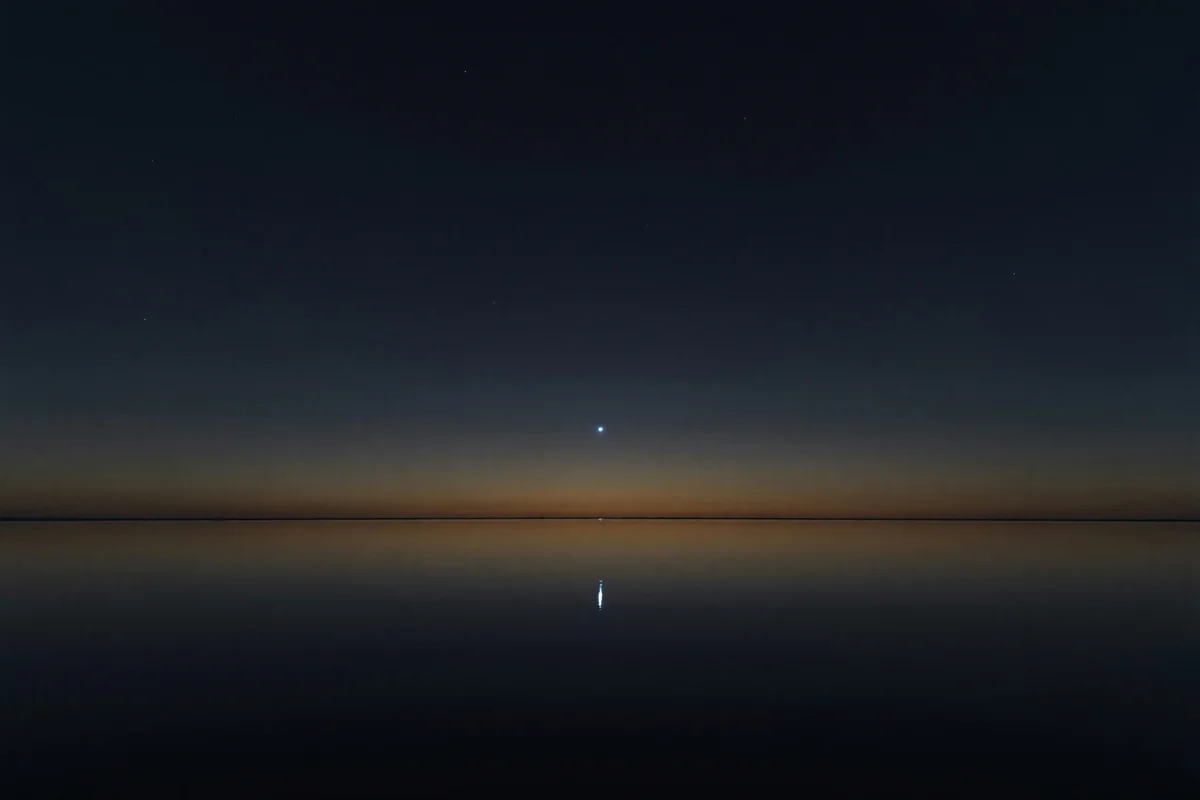
Sirius is the brightest star in our sky not because it burns hottest but because it is close. Decan 9 is power as clarity of signal, delivered near enough to be received, and the choice to let the real work be seen without scorching.
Part of The Decan Log: For the cosmology, astronomy, and journaling framework behind this decan, read the Sirius chapter. New to decanal journaling? Start with the Introduction.
Opening
Procyon went first and announced something brighter than itself. Sirius is the brighter thing, and the lesson it brought is almost the opposite of what the brightest star in the sky should teach. The power is not in the size. It is in the closeness.
Sirius is not the most luminous star near us. It is the brightest one we see because it is near, eight and a half light-years, close enough that a clear signal arrives clean. That is the whole teaching of the decan. A clear signal from nearby beats a vast signal from far away. Power is clarity delivered at a distance the other person can actually receive.
The Star and the Signal That Built a Calendar
The light entering your eyes from Sirius tonight left it in 2017. Recent light, from a year you remember.
It shines at magnitude negative 1.46, the brightest star in the night sky, and it earns that not by being a great furnace but by sitting close. Twenty-five times the Sun's output, modest next to the real giants, and still it outshines all of them from here because they are hundreds of light-years further away. The Egyptians built a calendar on it. They called it Sopdet, the Greeks called it Sothis, and each year it vanished below the horizon for about seventy days and then rose again just before dawn. That heliacal rising came days ahead of the Nile flood, the silt that made the crops, the crops that made the civilization. Sirius did not force the flood. It announced it, and a whole world organized itself around the announcement.
The Greeks heard the other half of it. Seirios means scorching. The Dog Days were the stretch when the star rose with the Sun, and the ancients blamed it for fever and drought and madness. The physics is wrong, the metaphor is exact. Power at full intensity, with no pause, burns. Clarity too bright blinds. And the Chinese called it the Celestial Wolf, because at peak brightness you also become the most visible thing on the field, and what is visible can be watched. The brightest star is also the most exposed.
What Is a Decan?
I track consciousness in ten-day cycles aligned with stars, adapted from the ancient Egyptian calendar. Thirty-six decans of ten days make 360, and five days outside time close the year. Each decan has a ruling star, a theme, and three phases: Initiate, Flow, Reflect. Decan 9 belongs to Sirius, and its theme is power and clarity.
Initiate: Days 1-3 (June 8-10)
The cycle opened on a decision I had already made the other way.
Yesterday I put off the thing I had planned, the first move to put my writing in front of the people I work near. Today I read this star and changed my mind. Procyon heralded; Sirius is the rising, and the move it asks for is to stop building only in private and let the real work be seen.
The part I had to get right was which signal goes first, and the star answered that too. Not the big abstract essay shouted from the doorway. The close one. I am leading with the field report I wrote by hand about the heat of the work, because it is the nearest, clearest, least fakeable thing I have, and nobody else is in that seat. The handwritten pages going public is the heliacal rising in miniature, a thing made in private becoming a signal others can set their clocks by.
The Dog Day caution rides along with it. One post, aimed, not a spree. Be bright without scorching, be seen without standing in the burn. Loose the arrow once and put the bow down.
Flow: Days 4-7 (June 11-14)
The plan was one aimed signal and then the bow down. The plan did not survive the week, and I am not sure it should have.
What happened instead is that the one close signal pulled the rest up behind it. Once the handwritten field report was out, the next thing to write was the plainest account I could give of how I actually work now, not the theory of it, the real thing with the costs left in. Then the tools. A few days spent making abstract systems visible, turning structure that normally lives in the head into something you can watch move on a screen and hear out loud. The proximity rule held the whole way through. The version of an idea that travels is not the grandest one, it is the nearest, the one rendered close enough to be received without translation.
That is the part I keep relearning about power as Sirius defines it. It is not magnitude. Rigel burns thousands of times brighter and nobody steers by it. Sirius is twenty-five Suns, modest by the cold numbers, and the whole night sky orients on it because it is near and it is unmistakable. The work of the middle of the cycle was to keep choosing the close, clear version over the vast, distant, impressive one, every time the impressive one tried to take the front.
Reflect: Days 8-10 (June 15-17)
By the last three days the one aimed arrow had become a barrage, and the Dog Day caution I wrote on day one came due.
I closed the cycle having shipped more in a week than I usually ship in a season. A long series on what this kind of work actually costs. A handful of essays. And a small library of build pieces that take hard, abstract systems and make them legible one concrete picture at a time. That last one is the thing I have been circling for a year without a clean name for it. Making the overwhelming navigable. Drawing maps so nobody has to go hunting near the furnace. I wrote that sentence in a notebook on day two of this decan, before any of it existed, and by day ten it was a body of work with its own shape.
So the reflection is split. The brightness was mostly aimed. There was one line running through all of it, and that is the opposite of scorching. But I felt the other half of the star too. At peak output you are also the most visible thing on the field, and the Celestial Wolf is the old name for what that attracts. Some of the heat I felt by the weekend was not the work. It was being seen at that volume.
Which is why the phase closed where the cycle had quietly started, on the breath. The foundational things that keep you from burning up in the heat of a star like Sirius are stupidly simple and easy to skip. Water. Sleep. A made bed. Breathe, then prompt, then breathe. The point of naming them is not discipline for its own sake. It is that you cannot work near the forge for long without them, and being bright without scorching runs entirely on whether you remember to come back to the steady, measured version of yourself between the bursts.
Closing
The brightest star is the closest one. That was the whole cycle, and the work was to let the real thing be seen, near and clear, without standing in the scorch.
Sirius keeps a second lesson behind the first. The blazing star we steer by has a companion we cannot see, Sirius B, a collapsed white dwarf with almost the mass of the Sun folded into something the size of the Earth. The most concentrated power in the system is the part that gives off no visible light. Bessel found it in 1844 only by the wobble it put in the bright star. So the visible signal, the work that goes public and organizes a week around itself, is real power. But it is not the only kind, and it is not the densest. Some of what holds the most stays dark and pulls quietly on everything else.
Power is proximity. Be close enough to be received, clear enough to be unmistakable, and disciplined enough to put the bow down before the brightness turns to burn. Then let it rise, and let it set.
Decan Navigation
Previous: Decan 8: Loyalty Is Not the Same as Staying.