Complexence
Complexity is the condition of the world. Complexence is the quality you bring to it: the capability of standing inside a system larger than yourself, seeing it whole, and still choosing. A word for the thing all my work has been about.
27 posts
Complexity is the condition of the world. Complexence is the quality you bring to it: the capability of standing inside a system larger than yourself, seeing it whole, and still choosing. A word for the thing all my work has been about.
If AWS is math and Kubernetes is physics, then discourse is the physics of other minds, the same live, empirical, pushes-back system, except the matter is a person and the latency is a blank stare. Why the studio and the arena are two different rooms, why the second one floods you, and how to build the faculty that levels the field.
The invoice for AI is the cheap part: a seat and some tokens. The real bill arrives in four ledgers: financial, attention, coordination, and development. Why AI makes the individual feel fast while the organization barely moves.
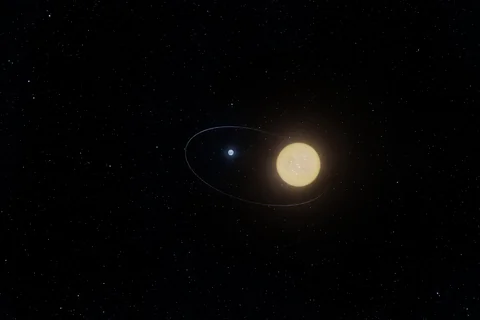
Sirius is the brightest star in our sky not because it burns hottest but because it is close. Decan 9 is power as clarity of signal, delivered near enough to be received, and the choice to let the real work be seen without scorching.
AWS is taught as two hundred services. Underneath it is a handful of primitives, and every service is a frozen answer to a distributed-systems trade-off. The map I built studying for the SAA-C03, and the two questions that decode any new AWS service.
Procyon, the herald that rises before the Dog Star, teaches that loyalty is not the same as staying. Fidelity to what is alive in you can require letting go of what is already dead.
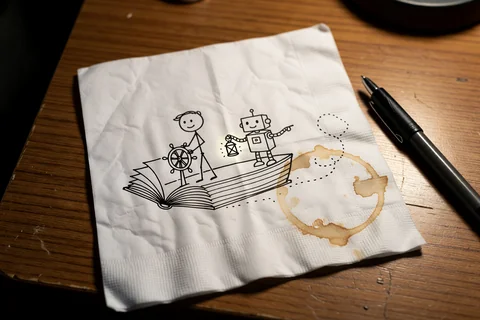
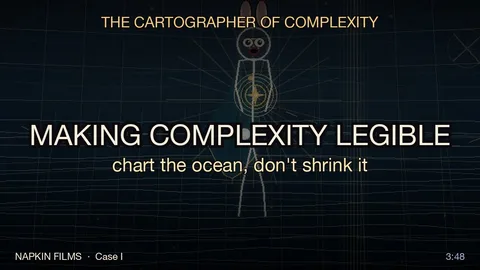
Making Complexity Legible is Case I of The Cartographer of Complexity, a new Napkin Films series about Making Complexity Visible. The idea: you cannot make a complex system simple without deleting what made it work, so you do not shrink the sea, you learn to read it. A tidal-EDM spit-rap, Plan 9 and OG Bobby trading bars over recomposed Telemann, with a cartographer bunny who roams a sea that brightens as it becomes legible. CC BY 4.0.
DevOps was always a feedback loop. The first one ran between people. The one worth building now runs the system back on itself, so every failure and every change makes the next one cheaper and safer. The recursion is the compounding.
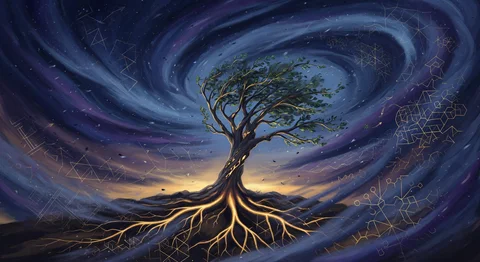
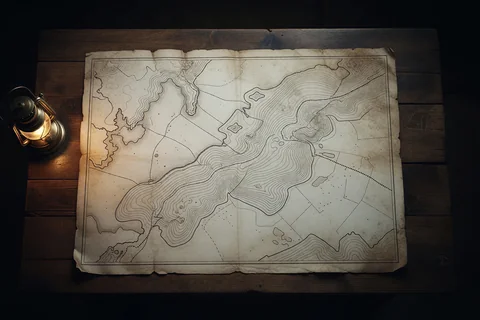
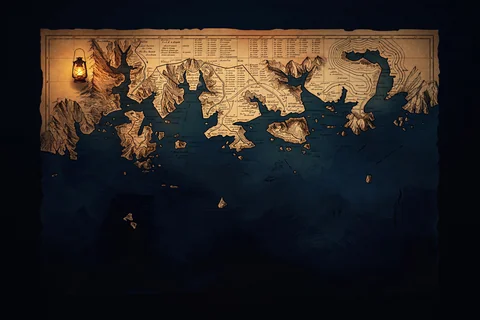
When a system gets too big to hold, almost everyone reaches for the same move: make it simpler. It is the wrong move. You cannot simplify the ocean. You can only chart it. This is about the difference between simplicity and legibility, why decisions quietly migrate to whoever holds the context, and how to make a complex system visible enough to navigate without pretending it is small.
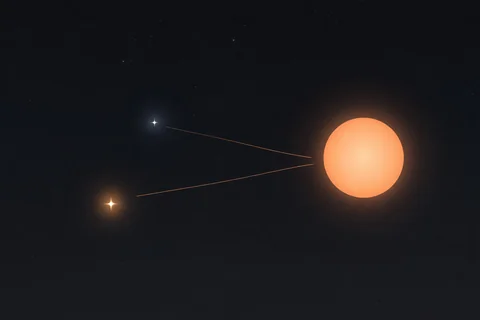
Life Ops is running your life as a deliberate system, designed the way you design software: observe before acting, choose responses over reactions, build systems that make the good path the easy one, and version the whole thing like code.
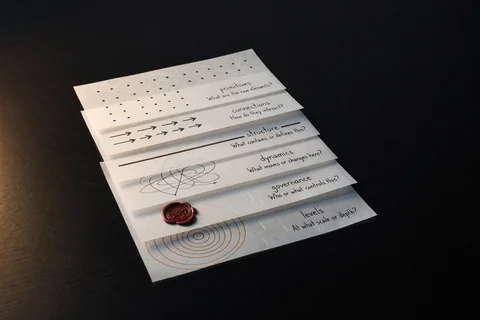
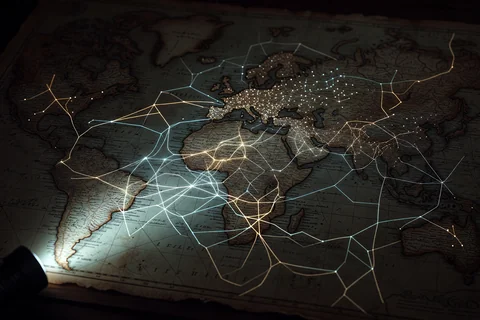
Coherent complexity is what you get when a complex system is made legible without being made simple. You do not reduce it. You map it, until you can move through it on purpose. A field guide to the practice, and the idea behind everything else I build.
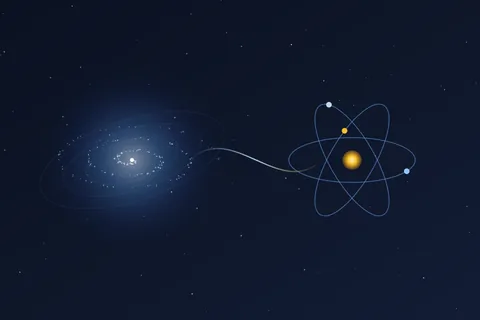
AWS versus Kubernetes is the wrong question. AWS is math and Kubernetes is physics: two ends of one spectrum, the galaxy and the atom. AWS gives you grand scale but you watch the cost; containers run nearly free but you watch the performance. Here is when to use each, when to use both, and why they become a symphony of systems together.
Antifragility is not resilience. Resilient things survive disorder; antifragile things gain from it. Here is how I apply Taleb's framework to fifteen years of engineering, the way I build films and books from code, and a ten-day journal cycle run as a stress rhythm.
Pollux, the brighter twin that Bayer named second, teaches that the label rarely matches the light. Ten days of holding two truths at once, at work and at home.
DevOps is not a job title and never was. It is a thesis about how to build systems that can change without breaking. Fifteen years in, here is what actually compounded, what automation never solved, and what agent mode is now revealing about the practice.
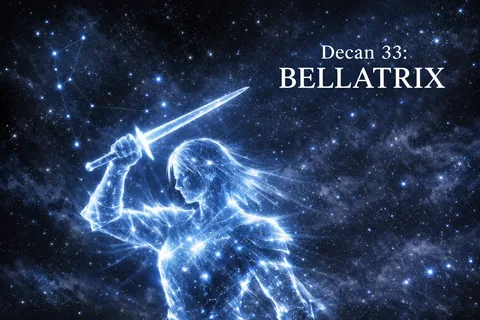
Alhena shows the hidden cost of noise: transmission quality, concise messaging, and recovery architecture matter more than raw effort.
Capella makes the sequence explicit: protect first, then renew. Boundary discipline and simplification preserve long-term throughput.
Menkalinan distinguishes push from steer: cleaner instrument choice and operator posture under pressure outperform visible force.
The mercury-manganese peculiarity in Elnath's spectrum is a product of stable conditions, not heat. Decan 3 tested whether bold expansion could run without the calm foundation underneath. On Day 7 it couldn't. On Day 9 it had to anyway.
Hamal reignited after burning through its first fuel. The Spring Equinox opened Decan 1 with that same question: not how to start from nothing, but how to find new fire from what already exists.
The decanal system handles the ten-day cycle beautifully. But what connects thirty-six decans into a readable year? What connects years into a life? Seven nested layers of time, each with naming conventions and review cadences, built on a five-thousand-year-old foundation and extended with systems thinking.
Everything about how we teach languages is backwards. Study, memorize, practice, then maybe speak. I built a system that reverses the order: speak under pressure first, log what breaks, drill the friction, speak again. No app. No gamification. Just markdown files, agent prompts, and real people.
On living where constellations touch, learning discernment through constraint, and the 175 million kilometers traveled while building liberation through empathy as Alpheratz remained invisible
On aspiration through volatility, F-U money as creative sovereignty, and trusting vision when the star remains hidden behind clouds for nine of ten nights
On agent mode as thinking transformation, building what holds when you step away, and the 535 million kilometers traveled while testing whether foundations could endure
On learning to glow under pressure, showing up when it feels absurd, and the 535 million kilometers we traveled while transformation unfolded
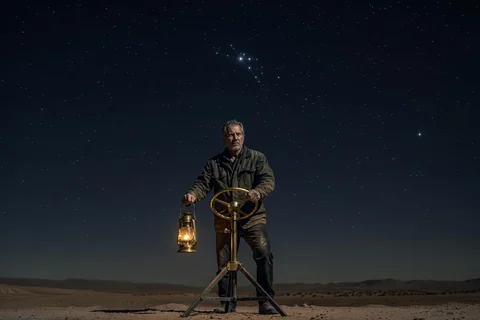
Time is motion. During 10 days tracking consciousness by starlight, we traveled 535 million kilometers through space toward the Great Attractor. On oath-keeping across cosmic scales, burnout as sacred data, and what Sisyphus does when he learns to automate the boulder. A philosophical synthesis spanning Stoicism, Absurdism, and Logotherapy.