
Where I Learned to Look
How I walk into a new field, through its history and its people, with a map, and with the first thing the Comparative History of Ideas taught me, that the one observing is in the picture.
Posts about working inside complex systems: mapping them, making them visible, and the thinkers behind the idea, like Edgar Morin.
11 posts · all topics
How I walk into a new field, through its history and its people, with a map, and with the first thing the Comparative History of Ideas taught me, that the one observing is in the picture.
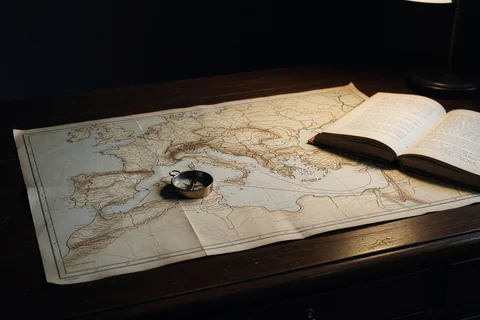
Edgar Morin died in May at 104, and I met him through his obituary. He spent eighty years on the question I have been building around, how to think inside the weave without cutting it apart. Two book reviews are coming. This is the marker I am leaving at the trailhead first.

James Gleick's The Information is the clearest history we have of how the world learned to measure the signal. It is also the book that showed me, by drawing the boundary so cleanly, the one thing the science of information set aside on purpose, which is meaning. This review is the origin story of the work I have been doing since I closed it.

I had thirty-three git repositories and treated all thirty-three as if they were on fire. The fix was not more discipline or a better tool. It was a census: an inventory, an edge, and a rule for what counts as alive. Domain cartography applied to my own sprawl.
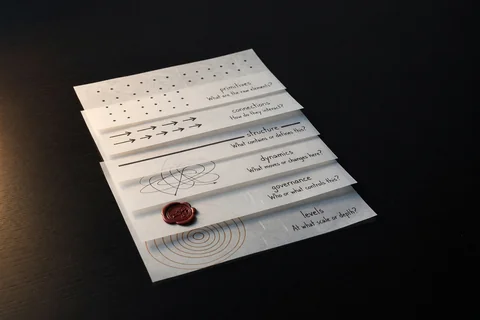
The hardest part of mapping a complex domain is the blank page. Here are the six layers I run every domain through, from primitives to levels, with the question each one answers, how to actually do it, and the failure mode that shows up when you skip it.
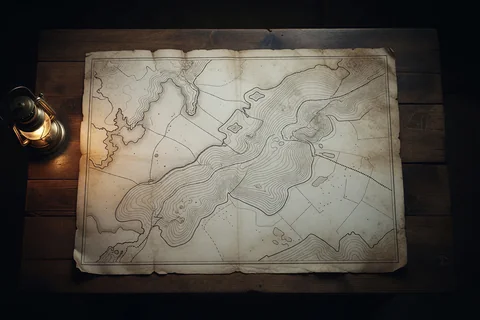
Domain cartography is the practice of charting a complex domain you have to live and act inside, until it is legible enough to navigate. Not making it simple. Making it readable. Here is the field, the method, and the six layers every map needs.
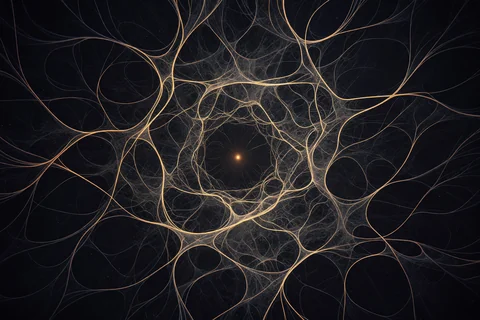
Complexity is the condition of the world. Complexence is the quality you bring to it: the capability of standing inside a system larger than yourself, seeing it whole, and still choosing. A word for the thing all my work has been about.
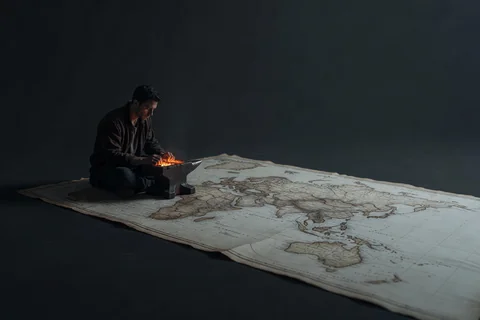
A field report from inside sustained agent-mode work: the heat behind the eyes, the way speed bends your sense of time, what it costs the body, and the practice that lets you build at the frontier anyway.
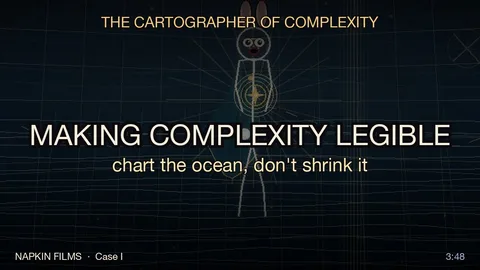
Making Complexity Legible is Case I of The Cartographer of Complexity, a new Napkin Films series about Making Complexity Visible. The idea is that you cannot make a complex system simple without deleting what made it work, so you do not shrink the sea, you learn to read it. A tidal-EDM spit-rap, Plan 9 and OG Bobby trading bars over recomposed Telemann, with a cartographer bunny who roams a sea that brightens as it becomes legible. CC BY 4.0.
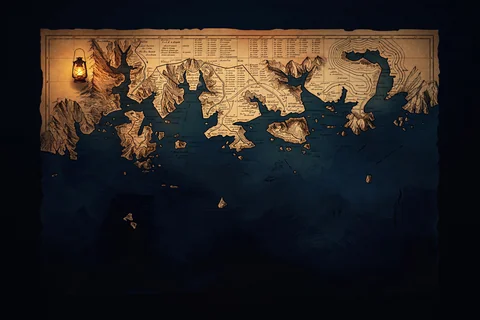
When a system is hard to see, decisions migrate to whoever holds the context. You cannot simplify the ocean, only chart it. Why a live view of a system widens the circle of people who can think about it.
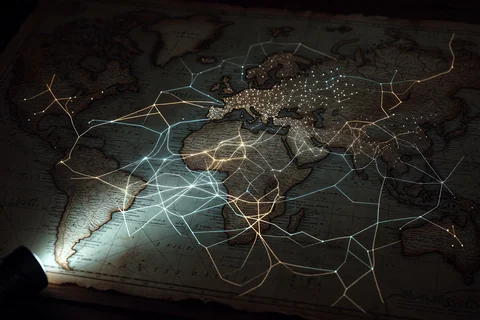
Coherent complexity is what you get when a complex system is made legible without being made simple. You do not reduce it. You map it, until you can move through it on purpose. A field guide to the practice, and the idea behind everything else I build.