
The Mind Places Things on Paper
My AWS exam deck scored 26 percent. I printed the whole study system as a paper packet, studied it one day, and the same review scored 47. Six weeks later the exam came back 799. Why a page is a place.
19 posts
My AWS exam deck scored 26 percent. I printed the whole study system as a paper packet, studied it one day, and the same review scored 47. Six weeks later the exam came back 799. Why a page is a place.

Three weeks ago I wrote about a script called hello, the one warm door into my system. I kept pulling the thread and the door turned out to be the outermost loop, the one that asks whether the whole thing can still become useful. This is what I found standing behind a greeting: cybernetics, nested watchers, and the rule that intelligence never gets its own hands.

I bought the IPO everyone wanted, and a quiet part of me narrated the mistake while I made it. The post-mortem found the real bug: a category I had built so I could skip my own system. Knowing isn't a system.

I typed my thirty-two loops, then drew them as a graph, and thought the loop was the top of the system. It turned out to be the roof of a stack eight floors deep, and the floor holding all the weight is the smallest one: the edge.
Typing my automation handed me most of its rules for free; the type carries the contract. One rule came free with nothing, and it was the one my system was breaking: every file gets exactly one job that writes it. On the difference between rules you remember and rules the structure carries.
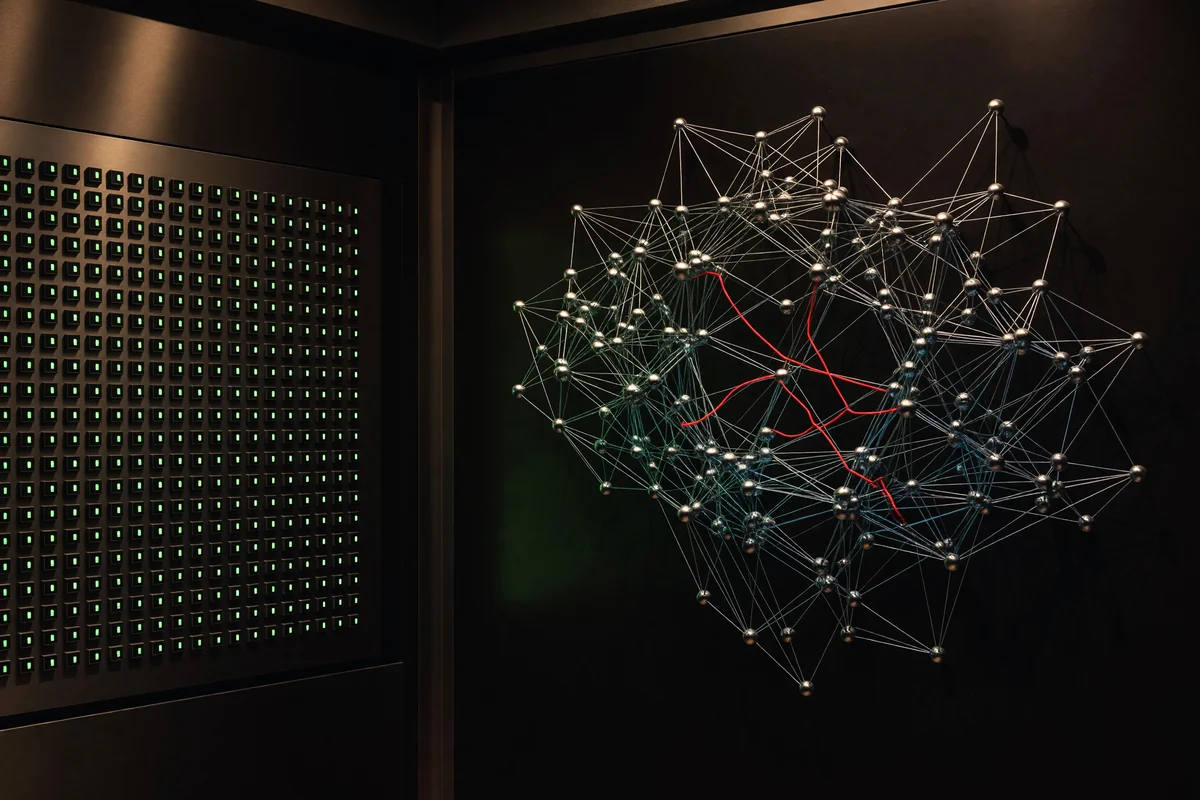
I gave every job in my automation a receipt, a health check, and a green light, and the system still would not fit in my head. A dashboard shows the state of the parts. The question I actually had was about the shape of the whole, and no amount of state answers a question about shape.

The best thing anyone told me about my own system this year was that I had not invented it. The scripts I grew by hand are a data pipeline, the shape is a DAG, and the discipline is solved. What the tools actually sell, why I am not buying yet, and the difference between wanting an engine and wanting a map.

Thirty-two automated jobs run underneath my days, I wrote every one of them, and I could not hold the system in my head. The problem was never my memory. It was a word. "Loop" was one word doing the work of seven.

Edgar Morin died in May at 104, and I met him through his obituary. He spent eighty years on the question I have been building around: how to think inside the weave without cutting it apart. Two book reviews are coming. This is the marker I am leaving at the trailhead first.
Making complexity visible is the method. Orientation is the objective function. The research program now has an installable runtime, laboratories that keep their data, and its first pre-registered experiment, running on my own life.
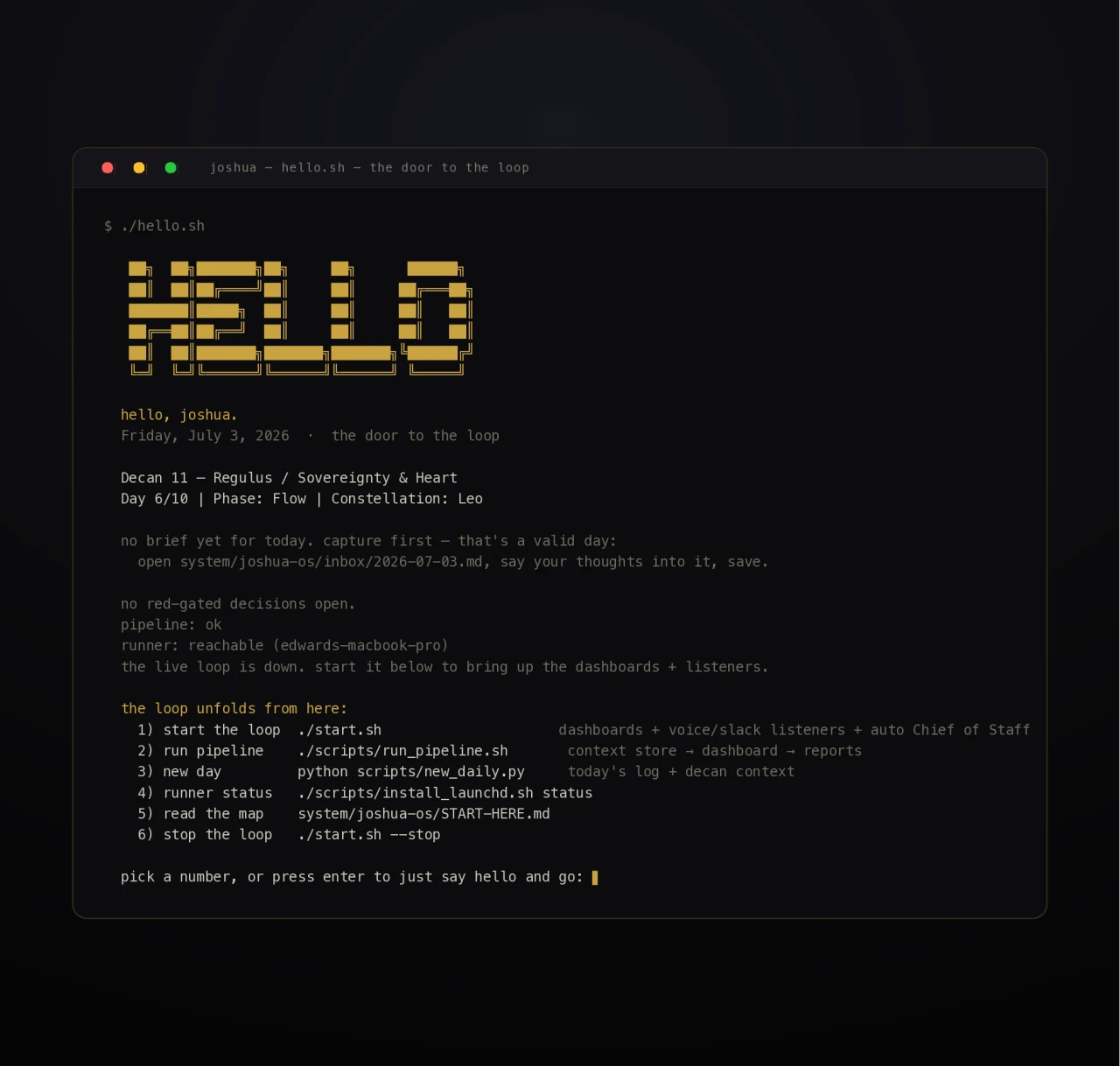
The first program you write used to be the machine greeting the world. Hello, world. I built a different first program: my own system greeting me. One warm door instead of four scattered starters, and the greeting sits inside the loop it opens, so it can reach in and improve itself.

James Gleick's The Information is the clearest history we have of how the world learned to measure the signal. It is also the book that showed me, by drawing the boundary so cleanly, the one thing the science of information set aside on purpose: meaning. This review is the origin story of the work I have been doing since I closed it.

I built a method, pointed it at my own thirty-four repositories, and watched the sprawl become a page I could read. Then I tried to prove its deeper claim and the first experiment came back null. Under the practice is a field: the science of complexence, the loop as a recursive equation, meaning velocity, and the cognitive form, an idea held apart from how you say it. A research program, published openly, nulls and all.
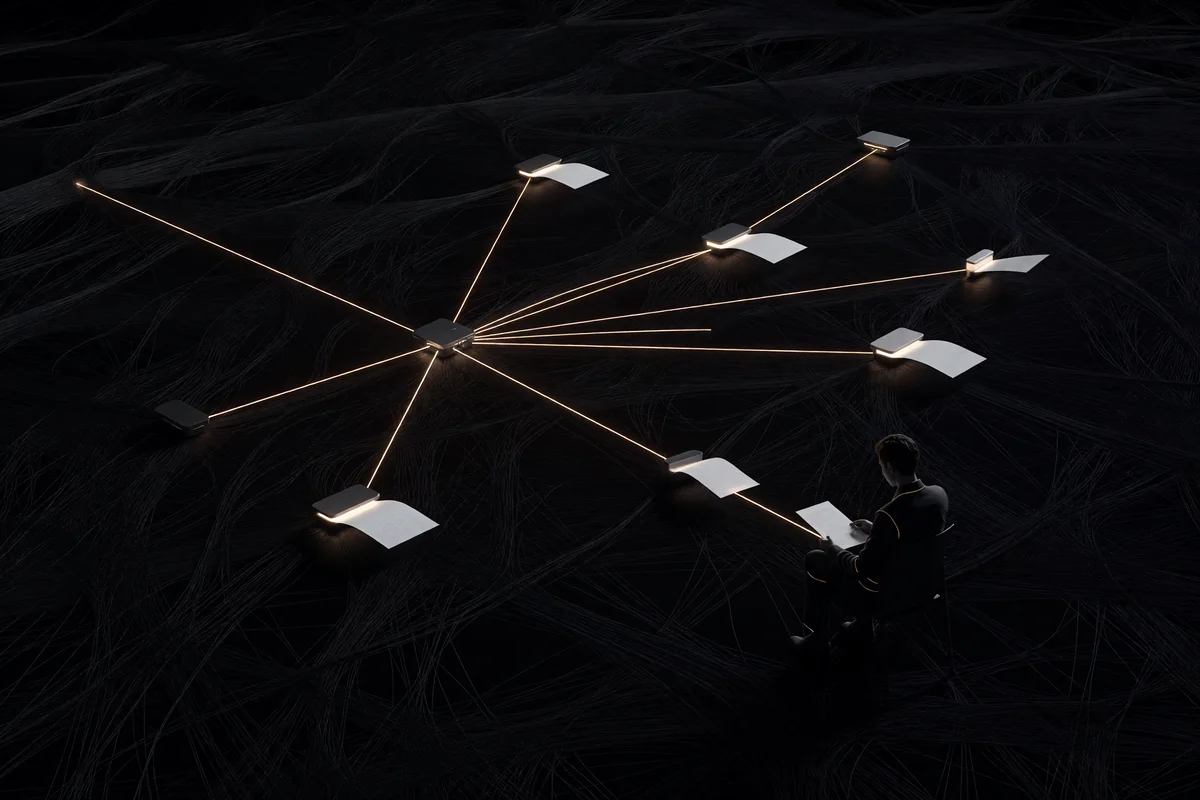
Complexence is the capability of staying oriented inside complexity. Complexence OS is the rough machine I built today to run it: you talk into a file, one Chief of Staff agent sorts what you said and hands the rest to a few specialist roles, and you review only the exceptions. Day one of going from AI assisted to agent director. The method is open source; your data stays yours.

The fight over whether AI is good or bad is the wrong fight. AI is a friction-removal engine, and there are two kinds of friction: the kind that is building you, and the kind that is only taxing you. Telling them apart, in the moment, is the whole skill.

Most defenses of AI are about productivity, and they are weak. The strong case is older and bigger: this is the next rung on a seventy-year ladder of removing effort that was never building anyone. Here it is, made at full strength.

AI does not destroy your work in front of you. It moves the cost somewhere you cannot see: to later, to the invisible, to the version of you that stops getting built. The strongest case against leaning on it, made in full.
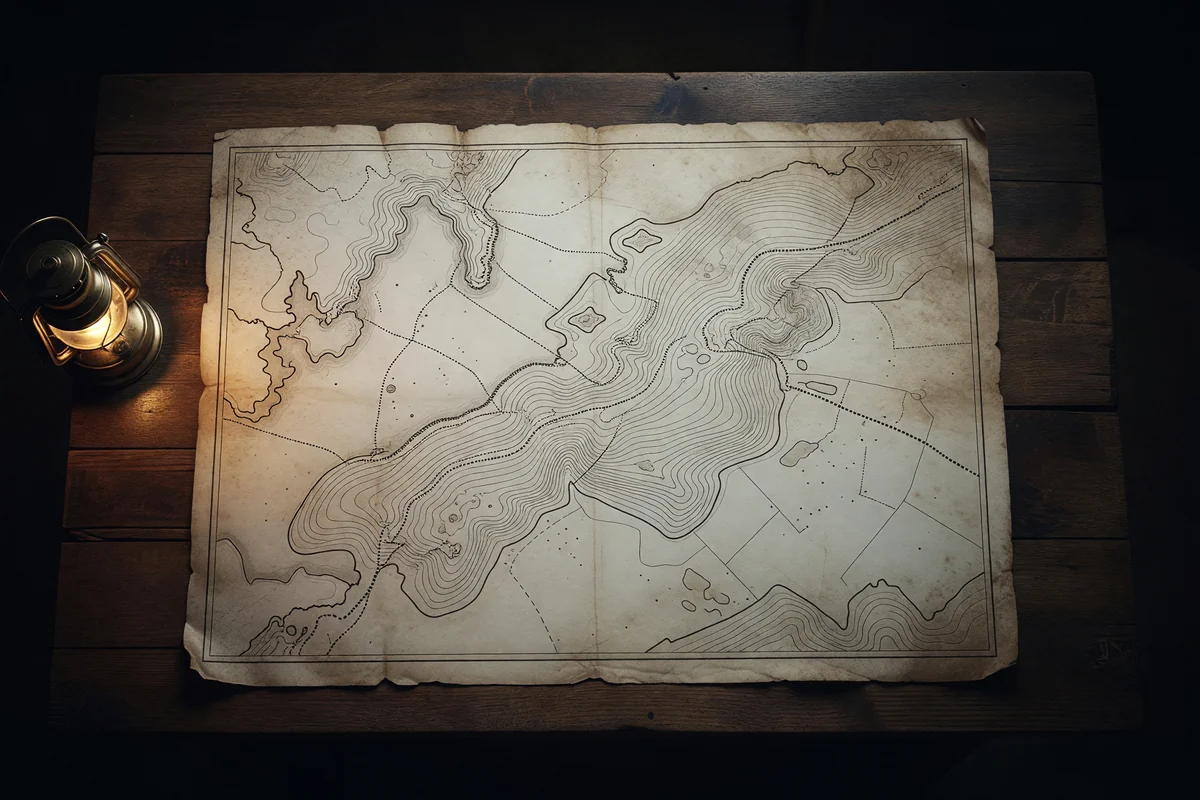
Domain cartography is the practice of charting a complex domain you have to live and act inside, until it is legible enough to navigate. Not making it simple. Making it readable. Here is the field, the method, and the six layers every map needs.
Complexity is the condition of the world. Complexence is the quality you bring to it: the capability of standing inside a system larger than yourself, seeing it whole, and still choosing. A word for the thing all my work has been about.