
Making the Deploy Wrong on Purpose
Last night's post ended on a question, can I make a belief in my pipeline false on purpose and watch it refuse. This is the experiment, written down with my predictions before any of it runs.
DevOps and infrastructure work: deployment, automation, and the habits that keep systems running.
27 posts · all topics
Last night's post ended on a question, can I make a belief in my pipeline false on purpose and watch it refuse. This is the experiment, written down with my predictions before any of it runs.

My deploy carries a model of itself in stamps, manifests and flags, and it was wrong twice in a month while the pipeline did the checking. Three loops, a crawl that had never passed, and the cybernetics underneath.
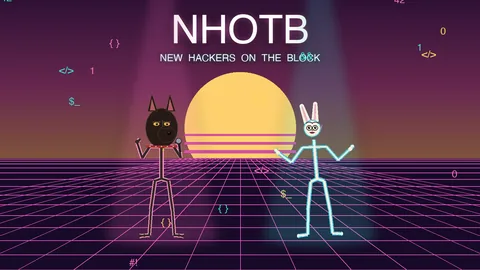
OG Bobby Johnson has a plan. Plan 9 is an AI, so he's taking the notes. The DoorDash of DevOps. Push to prod on Friday, page me Sunday. A duo rap that roasts tech culture and the fear of AI, then turns: take it apart, learn it.
Most of my essays had gone missing from the page that lists them, on production, and every check passed. The same week turned up five more checks on this site that could not fail. What they had in common.
Change the drag constant in my arcade game by one part in a hundred million and twelve recorded runs stop matching. That strictness is the foundation the replays, the scoreboard, the co-op and the releases all stand on.

Development environments lie in two directions. Clone production and it is too expensive to use. Mock it and it is confidently wrong. Here is a third option, and a working hybrid lab that joins a Kubernetes cluster on my laptop to a real Windows host behind a real AWS load balancer for about nine cents an hour.

Typing my automation handed me most of its rules for free, the type carries the contract. One rule came free with nothing, and it was the one my system was breaking. Every file gets exactly one job that writes it. On the difference between rules you remember and rules the structure carries.

The best thing anyone told me about my own system this year was that I had not invented it. The scripts I grew by hand are a data pipeline, the shape is a DAG, and the discipline is solved. What the tools actually sell, why I am not buying yet, and the difference between wanting an engine and wanting a map.

A static site has no server to check a password, which is fine right up until the day you need one. My staging site is the problem in miniature. It is a full mirror of production, except it also carr...

A strict Content-Security-Policy on a static site allowlists inline scripts by hash. Change one script, forget to update the hash, and every page renders blank. The incident that taught me, and the deploy guard that ends it.

Not a tools list. The tools keep changing; what changed underneath is where the hours go: specs in the morning, batch review in the afternoon, and the judgment work that never left.
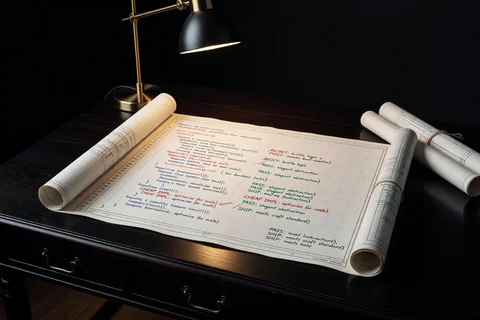
The code got cheap. The review did not. The review workflow I actually use when AI agents write most of the diff, with three passes, an adversarial second agent, and the discipline of reading what ships.
A manual for building software with an AI agent: the setup, the loop, context management, and the Claude Code and Copilot commands I use every day. Written like the old Linux HOWTOs.

DevOps was always a feedback loop. The one worth building now runs on the system itself, so every failure and every change makes the next one cheaper and safer.
Microservices used to be a tax a solo builder could not afford. AI agents change that math. Here is why I am drawn to the architecture for what I build next, and the discipline that keeps it from becoming a mess.

This site was rebuilt from scratch by directing an AI agent, then migrated off cPanel onto AWS S3 and CloudFront. Here is what that actually looked like, the parts that worked, and the day a deploy script quietly deleted production.
When a system is hard to see, decisions migrate to whoever holds the context. You cannot simplify the ocean, only chart it. Why a live view of a system widens the circle of people who can think about it.

I use GitHub Copilot at work and the Claude Code CLI at home, every day. Here is the firsthand comparison for DevOps and infrastructure work, from someone who ships with both, in the context each one actually lives in.

Life Ops is running your life as a deliberate system, designed the way you design software. Observe before acting, choose responses over reactions, build systems that make the good path the easy one, and version the whole thing like code.

Agent mode is when you stop typing code and direct an AI that reads your codebase, writes the change, runs the tests and reports back. How it differs from autocomplete and chat, the loop, and when to use it.

Antifragility is not resilience: resilient things survive disorder, antifragile things gain from it. How I apply Taleb to the systems I build, to films and books made from code, and to a ten-day journal cycle.
DevOps was never a job title. It is a thesis about building systems that change without breaking: what compounded once the tools became a commodity, what automation never solved, and what agents change.
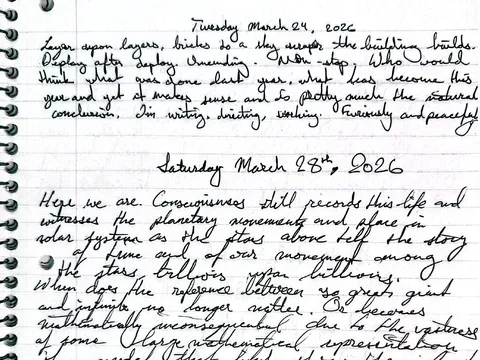
Layer upon layer, bricks to a skyscraper, deploy after deploy. What was done last year and what this year has become, and working furiously and peaceful at the same time.
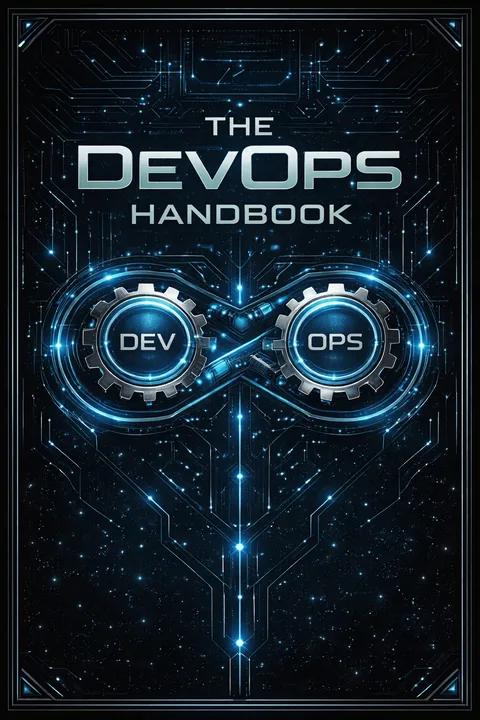
The DevOps Handbook is the clearest account I have read of why some teams ship small changes often without breaking things. A walk through the Three Ways, the technical practices, and what has dated.
How I work in agent mode with Claude Code: a CLAUDE.md file as the specification, whole subsystems handed over, and AWS infrastructure built by describing what should exist.
A commit co-authored by Claude raises new questions for Git: what one commit should hold when a day of work takes twenty-five minutes, and how to record who wrote what.
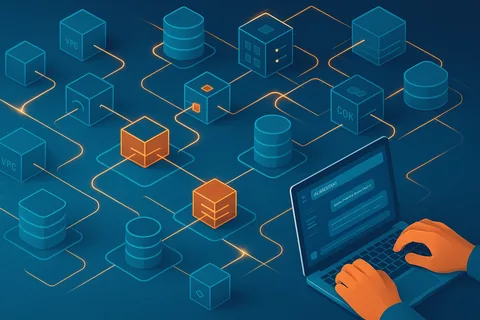
Building the Organic Arts back office on AWS with AI in weeks, CDK stacks for identity, networking, compute and security, and what holding all of it in my head cost.