What I'm Building Right Now: May 2026
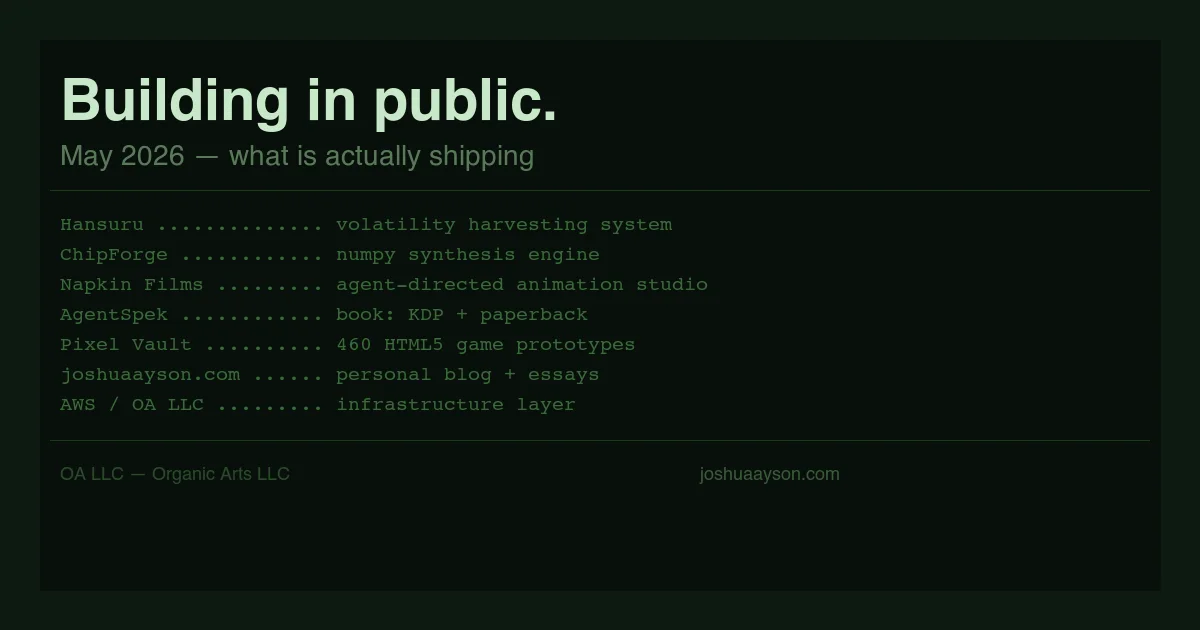
A transparent look at the active workstreams in May 2026: trading systems, animated films, music synthesis, a published book, and an AWS cert study track. All of it agent-directed.
Explore all posts in the Thoughts category.
15 posts
A transparent look at the active workstreams in May 2026: trading systems, animated films, music synthesis, a published book, and an AWS cert study track. All of it agent-directed.
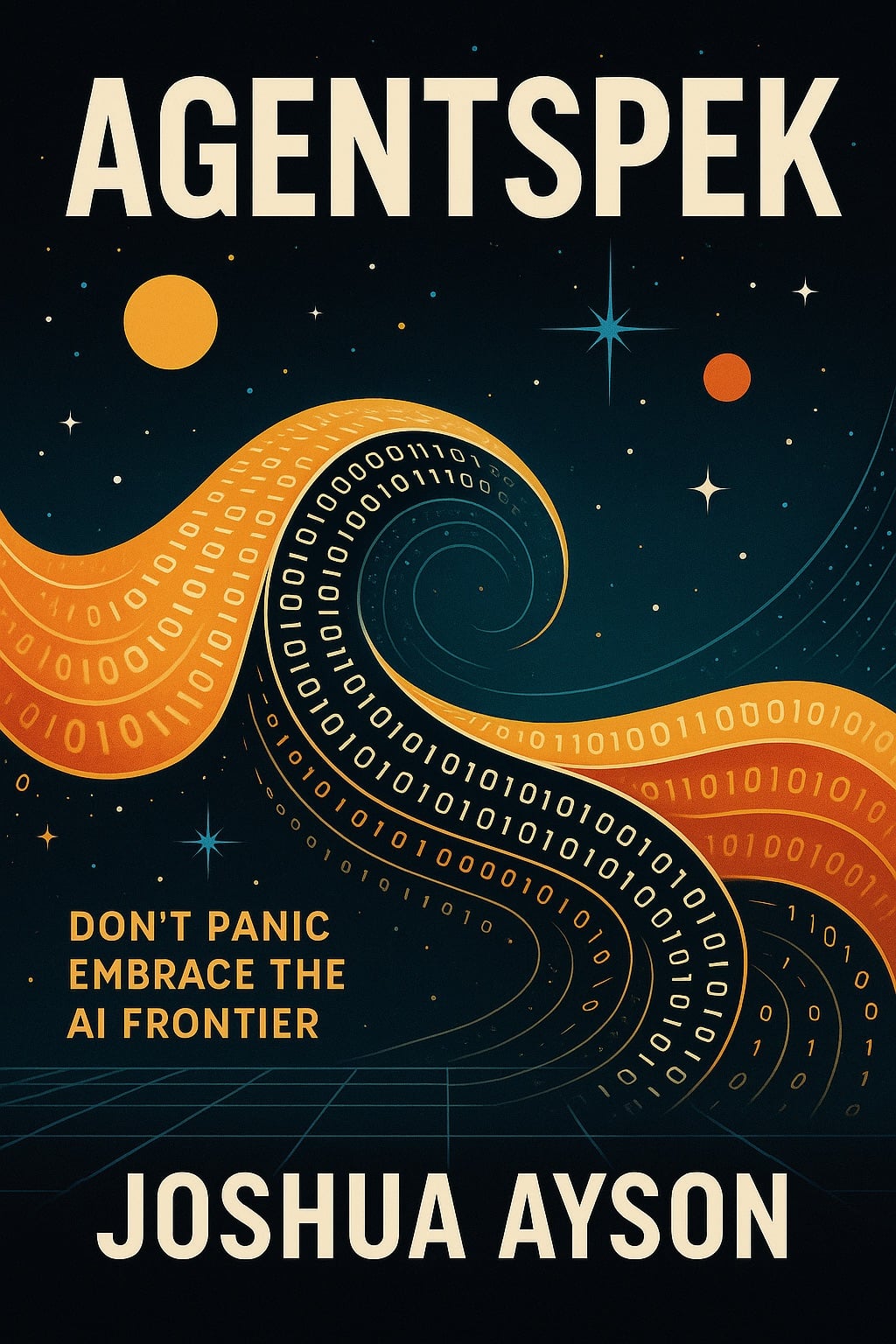
I wrote a book about coding with AI using AI to write it. Now it is on Amazon. Here is what that process taught me, and why I think this is the beginning, not the destination.
Napkin Films produces animated short films entirely from code. Stick figure characters deliver real performances through expressive poses, multi-voice text-to-speech, and chip tune scores. No GPU, no subscriptions, no 3D modeling. Just Python, PIL, and FFmpeg.
ChipForge synthesizes music entirely from numpy arrays. No samples, no recordings, no external audio libraries. Every sound is generated from code: 168 instrument presets, 19 synthesis types, 6 historical tuning temperaments, and 140 songs rendered so far.
Four open-source projects built with AI agent mode. A game museum, a music synthesizer, an animation studio, and a language engine. Each one operates under hard constraints, runs without dependencies, and ships real artifacts. This is the philosophy underneath.
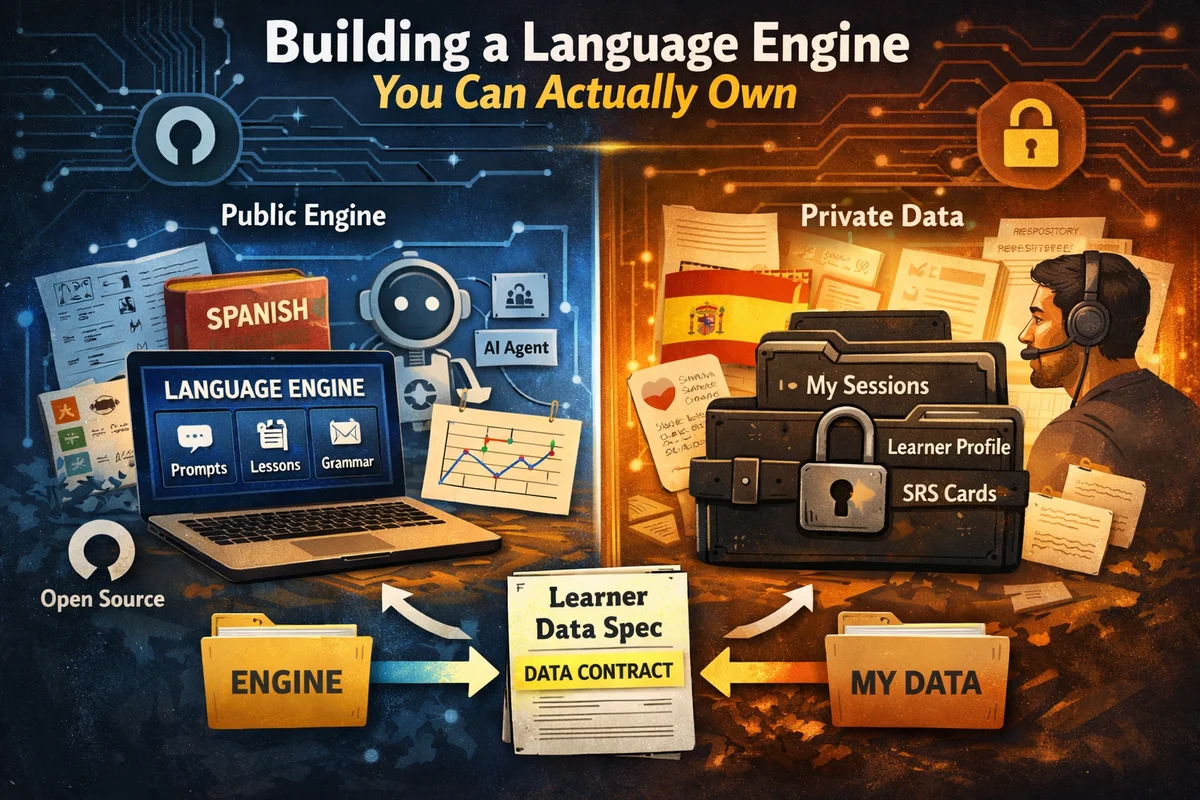
Velocidad started as a personal Spanish learning system. It is becoming something bigger: a general-purpose knowledge engine where agents run the practice loop and plain text files hold the curriculum. No app, no account, no subscription.
Every prototype is one HTML file. Under 50KB. No frameworks, no CDN, no npm. Double-click and play. Pixel Vault is a growing museum of playable game mechanics built from scratch, organized by lineage, and playable forever in any browser. Two published tracks cover 70 years of arcade history and the AI archaeology overlay that shows what the machine sees inside each mechanic.
One afternoon, one HTML file, and something clicked. Pixel Vault is a growing museum of every fundamental game mechanic in its smallest possible form. Twenty-two prototypes and counting. I am casting a wide net looking for the one that feels like nothing else that has ever existed.
What if time had architecture? Not metaphorically, but structurally: seven nested layers from the daily to the cosmic, each with naming conventions, data models, and inheritance rules. Built on a five-thousand-year-old Egyptian astronomical calendar, extended with concepts from software engineering and options trading. This is the design specification for a personal temporal operating system.
On the Spring Equinox I named my year. Not January first, not a birthday, but the moment the Sun crosses the celestial equator heading north and the light begins to win. The ancient Egyptians knew this. Thirty-six decans of ten days each, marked by the stars that rise just before dawn. Today is Decan One. The ram's star, Hamal, rises. And the year has a name.
Velocidad-AI is an open-source Spanish learning engine licensed under GPL-3.0 with twenty reference files including a Cognate Accelerator that unlocks thousands of words, a military-style Field Manual for daily practice, five real-world scenario ladders, six agent prompts, two hundred cloze exercises, and fifteen memory techniques. The reference content is CC BY-SA 4.0, fork it, adapt it, share it. No app, no account, no subscription.
Everything about how we teach languages is backwards. Study, memorize, practice, then maybe speak. I built a system that reverses the order: speak under pressure first, log what breaks, drill the friction, speak again. No app. No gamification. Just markdown files, agent prompts, and real people.
A confession and a manifesto: living in the pages where AI-assisted content is forged, choosing intentionality over accident, and discovering why the difference between "slop" and craft has nothing to do with the tools.
Time was never the constraint. We just lacked the language to describe what was. A meditation on attention, collaboration, and where the threads of a life should go.
Agent mode changes everything. Learn how to structure repositories, manage extended context, and build systematic workflows that let AI agents handle complex software engineering tasks autonomously.